Salastina Salastina

From our Sounds Promising Young Composers, Part II

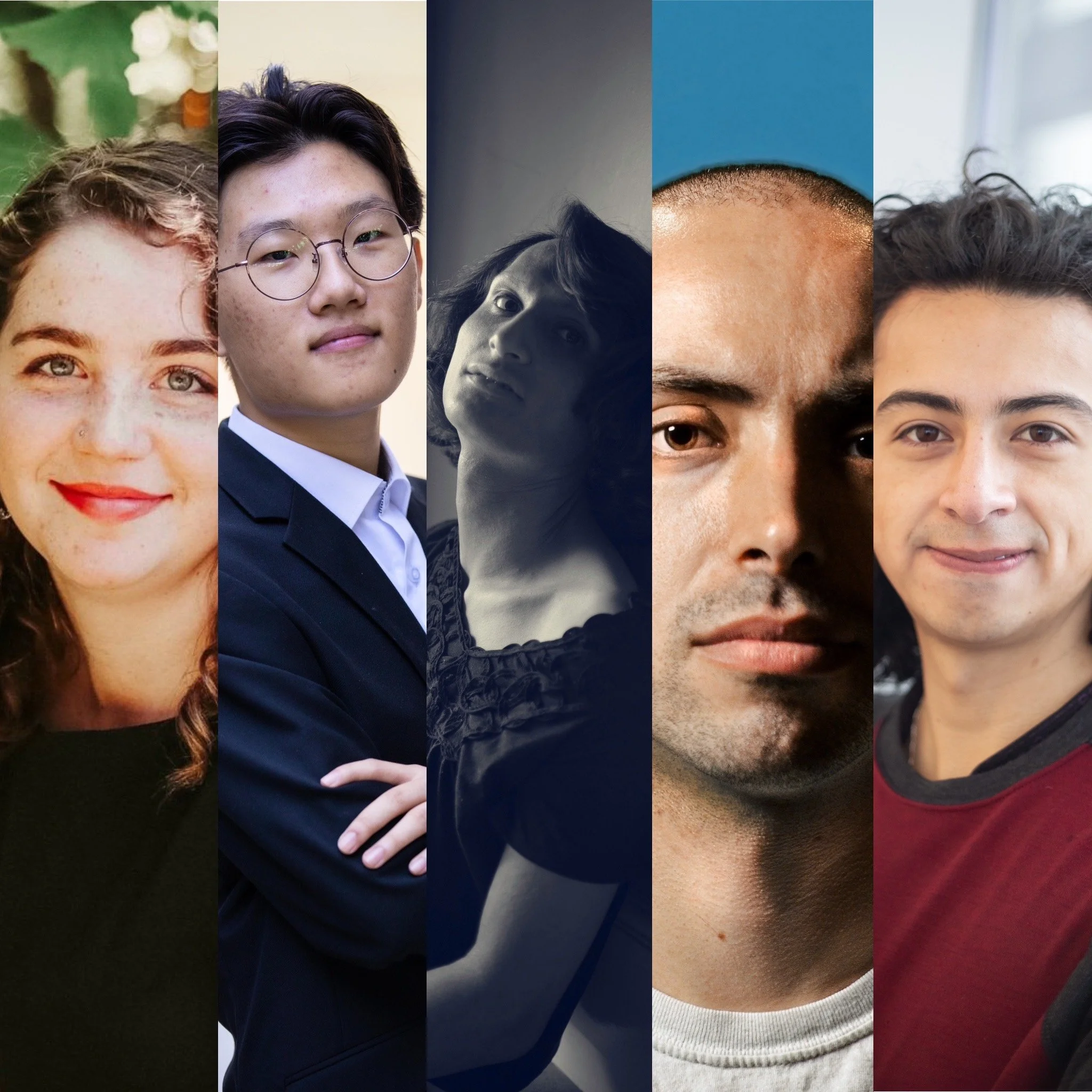
This year’s incredible cohort of Sounds Promising Young Composers shares more thoughts on their experiences in the program.

In an environment where access to opportunities for emerging composers is more competitive than ever, Salastina’s Promising Composers Programme has been like gold dust at this point in my career. As Nicholas Ma so wonderfully put it in the first half of this blog post — not only have we had the opportunity to write, workshop, and record a new piece for Salastina’s world-leading musicians, but also to connect and curate a real community of composers through our monthly Family Meetings over Zoom with with Maia, Kevin, and Derrick.

I’ve definitely found the selection process for Sounds Promising to be unique amongst many artist development initiatives and schemes. It’s always interesting to see what happens when you put a group of “community leaders” together, so to speak — almost like curating a community of communities. From my experience on this programme, it’s led to fascinating conversations and insights in our Family Meetings; while each of us has a very different skillset that we’ve honed through the different facets of work we’ve done, we’re all learning from each other, bouncing ideas about contemporary music and the artistic community, and helping each other out.

Alongside fellow Sounds Promising participant Nicholas Ma, I wanted to provide an opportunity for all of us composers to reflect on our experience on the programme, how each of our individual approaches have shaped our pieces for Salastina, and how the programme has developed us as artists. If you haven’t yet, please do read the first of these two blog posts, hosted by Nicholas — and do stay tuned for the second half of these wonderful premieres, happening this Sunday 19th!

- Zygmund de Somogyi


Quite a few people have been involved in cross-cultural and cross-genre projects (including Derrick) - what kinds of projects have you undertaken + how have they impacted your work?

Jazreel Low:
 There is a locally-brewed composition workshop-cum-programme called the New Sights Fellowship, which focuses on featuring instruments from different ethnic ensembles in Singapore, and hosts workshops for idiomatic writing as well as exploring the local culture. It was through this program that I gleaned a deeper appreciation for Singapore's multiculturalism and was prompted to contemplate the necessity of achieving equal representation in music. In writing my composition, ‘Shophouses’, I tried to strike the right balance between traditional and Western musical elements whilst writing idiomatically for the different ethnic musicians. It also incorporates various ragas and maqams interchangeably with different modes - this is something I would like to feature more of in future works!

I previously also scored the music for a short documentary titled Pulau, which featured the migration of local inhabitants from Singapore’s neighboring islands (also known as “pulau”) due to land development pressures. The director wanted music throughout the film, so it challenged me to write in a way that did not overwhelm the dialogue and have the music shift to match the tone of the scene, whilst incorporating elements of traditional musical timbre for a more “kampong” feel.

Zygmund de Somogyi: I’ve recently been doing a lot of experimental theatre work! I’ve spent the past year working with an immersive theatre company called Mushmoss Collective, with wonderful collaborators and humans Ariella Como Stoian and Susie MacDonald (and sometimes actor Lisa Maeda — whose narration features in my piece for Salastina, ‘A LIGHTHOUSE FEVERDREAM’!). Our roles are all multi-faceted; rather than a traditional “theatre company” setup where I’m mainly in charge of the sonic side of things, we all have a hand in different parts of the process. One of our most recent shows involved an installation we call the “Memory Tree” — an immersive archive of audiences’ experiences and shared storytelling, with responses and changes reflected between each performance. I also played a prophetic shrimp giving out ominous tarot cards. It’s been a lot of fun to work on.

I’m always surrounded by, and immersing myself in, interdisciplinary and cross-genre projects as a composer. Much of this probably has to do with my upbringing. I’m not from a classical background — I struggled with the cultural baggage and lexicon of classical music for a long time (and to an extent, still do). I learned music from playing in punk rock bands and touring the country playing small DIY basements — I still play in a punk band, writing songs under the moniker Trouble Sleeping with some old friends of mine in Sheffield.

In a lot of ways, I’d say my approach to composing is more informed by my experiences in punk and DIY communities than classical music. I never bought into the mythologies of classical music — therefore, I feel much of my appreciation of the canon comes from a more naturalistic and purely-musical place, outside of that cultural baggage. But what do I know. Maybe I just like sounding cooler than I actually am.

Are you a sketch-on-hand type of person or a compose on software, etc, and how does that affect your composition process? (Eg. Derrick says he is a compose-from-start-to-end type of person.)

Mieke Doezema: 
I use a combination of techniques to investigate potential compositional ideas. My routine usually starts with improvising on guitar or piano (neither are my main instrument) to unravel some sort of melody, texture, or sonority I find interesting. As I record myself, I will either talk through or sing where I think an idea could go. Once I have my recordings, I will then move on to notation using software or hand. I try to practice writing by hand to strengthen my inner ear but I think it’s fair to say many of us skip to software notation in a crunch. 

Aaron Israel Levin: My composition process often starts by accident. I find inspiration in everyday sensations and experiences, like the sting of a bitter winter wind, or that sloshy, molasses-like feeling of trying to run in dreams. Out of nowhere, I might have the idea for a melody or orchestrational color. I’ll then go to the piano to try and translate this idea from my imagination into something that can be performed by a real life musician. From there, my composition process dances between playing at the piano, sketching by hand, and using computer software to help me realize these concepts. This process is often messy and inconsistent, but Salastina’s composer mentor Derrick Skye — with his own idiosyncratic and brilliant process — has been an invaluable resource in helping me refine the mysterious, beautiful, and scary undertaking of transforming musical ideas into musical reality.

William Jae: A little old school, but I usually sketch my pieces by hand on the piano. Once I get a decent grasp of what I want (or when I run out of paper), I then begin inputting the music onto a notation software. When I first started composing, I didn't have access to notation software and I had to heavily rely on my ears to accurately imagine the music. Looking back, I find that playing the music is a much more holistic and hands-on approach. Although I will say, it is fun to put together the most absurd tuplets onto a notation software and hear it play back.

What role does research play in your compositional process (cultural traditions, interdisciplinary subjects, current events)? 

Celina Kintscher: My piece for Salastina, ‘Fractured Hope’, took me on a journey of feeling the emotions, processing the emotions, understanding the event, and translating all of that into music. I felt the urge to write about an event that moved me, kept me up at night, and deserved undivided attention: the earthquake in Turkey earlier this year. This time I was a bystander to someone else’s reality. My role was to retell, but in order to achieve that I had to feel even the tiniest fraction of those emotions myself. Being in contact with a Turkish family, I went from thinking about the earthquake largely as a physical event to the huge aftermath that thousands had to deal with. The journey from desperation to some sort of peace was personified in my head as Hope. If Hope is a being, perhaps it truly cannot recover from some forms of grief. It’s fractured — but its pieces are still there. In honoring the Turkish family’s story, ‘Fractured Hope’ became a commemoration of the tribulations Turkey was facing, making its way across the ocean to an audience who, like me, could just try to understand.

Zygmund de Somogyi: Compositionally, I think everything is a kind of research. It doesn’t have to be academic or anything (and definitely isn’t, for me) — but learning something about yourself, what sounds you like/dislike, what works for what instrument for whose ears… It’s all research, in its own way.

For me, what interests me the most is feeling. Music — whether mine or other peoples’ — has always been an avenue to express myself in a way I can’t with words. I usually describe my compositional aesthetic as metamodern, or “post-postmodern” — or aligning with cultural sensibilities of metamodernism — which forms the backbone of my compositional research. There’s a lot to describe within that field, but what speaks to me the most are its treatment of simultaneous irony and sincerity — being serious while pointing out the impossibility of seriousness — somewhere between hope and cynicism, between “modern” romanticism and “postmodern” apathy. Films like Everything Everywhere All At Once, or TV shows like The Last of Us or BoJack Horseman, do this very well.

That being said — for me, the best art is that which transcends the era in which it’s created. I wouldn’t necessarily say my work is overtly political, or engages directly with current events — however, I do believe my work is still political, in the sense that engages with the mentalities and sensibilities of its time. In a sense, everything is political — it just depends to what degree one engages with political structures.

Mieke Doezema: I strive to make sure the stories I tell through my music are accurate and founded in facts. When I draw inspiration from a concept, I make sure to double and triple check that my thoughts and opinions are based in fact and that they are poignant enough to cause debate. Whether I am inspired by martial arts or climate change, I make sure to research all angles to verify the picture I’m painting is my irrefutable truth. 

How do you find a sense of closure/know when to end a piece? (Always going back to re-edit, having a trillion “final” copies titled Composition FINAL DRAFT 28 REAL.pdf)

William Jae:
 As long as the performers find it doable, I am content. My professor once said that, "A work of art is never finished, it is merely abandoned." Although I may never write a perfect piece, I do believe the ideas persist and will permeate and transform in future works. 

Jazreel Low: I am no stranger to having many “final” versions myself; last I counted, I had less than a trillion, but more than 28 versions of what was supposed to be the final work. But more often than not, my works are never considered final until the “final final” performance/recording. We could probably find infinite ways to add and change things in a piece, especially because of the rate at which we learn about new forms/techniques to experiment with. Ultimately, the deciding factor definitely has to be how accurately the piece conveys its intentions and of course, the much more tangible deadline.

Riccardo Perugini: Discovering closure within a composition requires finesse. I've discovered that self-imposed deadlines provide a valuable sense of conclusion. Equally essential is accepting imperfections; perfection is an elusive goal. Maintaining a continuous workflow nudges you to finalize one project and move forward to the next. Furthermore, revisiting compositions after a few years and crafting new versions for different instruments enables me to infuse my present artistic vision into my older music, breathing new life into it while achieving a fresh sense of closure.

How was the experience attending the rehearsals of the pieces, and hearing the other composers’ pieces come to life too?

Jonah Cohen:
 Attending the rehearsals of the pieces was just a ton of fun. Salastina's Resident Artists and guest artists were such a joy to interact with, and were very flexible and willing to make adjustments. Working with musicians of an extremely high caliber is always a privilege, but Salastina's musicians are really something special. Hearing my pieces and the pieces of my colleagues come to life through the rehearsal process was very informative, and I feel that I have gained a greater understanding of the logistics of rehearsal and the capabilities of different instruments. In addition, I have to give a big shout out to Adan Alonso, Salastina's Virtual Production Manager, who was so helpful and accomodating during the workshops.

Nicholas Ma: It’s always such an incredible (and at times, surreal!) experience seeing your composition come to life. I’m always amazed at this process - what initially may have been fuzzy images in your ears or on the page gets given form in the real world by performers who have dedicated their time and experience to playing your piece. HyeJin, Luanne, and Charlie played my piece way better than I could have imagined - I love how they also added their own artistic interpretations to the piece (especially in the limited aleatoric sections!) and whenever there were parts I was concerned about, they made helpful suggestions and demonstrations on how I could improve these figurations. 

Listening to the other rehearsals was also fascinating. It offered a glimpse into how my peers composed, their inspirations, and thought processes. They would often come up with techniques or ideas that were so unique! Just listening to their pieces and what the performers had to say about their works greatly enriched my own artistic perspective. Apart from this, I also learnt about the technical side of things. Adan, who was in charge of all the technical equipment and recording, gave many helpful tips and information about gear, setup, and recording details when he heard my interest in how professionals do recording sessions. Overall, this was an invaluable experience!


In a world where it feels like classical music is under threat — through the economic reality of emerging artists in the industry, the evisceration of major arts funding in my home country, the elitists who proclaim the irrelevance of classical music and composers — sticking together, building a foundation of artistic community, is more important than ever. It’s unbelievably heartwarming to have experienced the solidarity, camaraderie, and kinship that Salastina have nurtured with us this past year. One naturally osmoses the mentality and ideology of those one surrounds oneself with — and I hope that I can take forward what I’ve learned through this ambitious, nurturing, and inclusive community that I’m unreservedly grateful to be part of.

To round off this season of Sounds Promising: I want to extend a wholehearted, unwavering thank you to Salastina’s amazing directors, Maia and Kevin; to our mentor Derrick Skye, whose artistic and developmental insights have been invaluable; to all of Salastina’s wonderful performers, who did such an incredible job at realising our pieces; to our technical maestro Adan (for his intransigent patience!); to Audrey, Marissa, and everyone who made Sounds Promising possible for us; and finally, to all of the composers and artists who have made music and community with Salastina — past and present. You’ve all made our experience together so unbelievably special.

See you at the premieres!

Read More
Salastina Salastina

From our Sounds Promising Young Composers

In advance of their pieces premieres this Fall, our 2022/2023 Sounds Promising Young Composer cohort shares their thoughts on the experience.

Salastina's Sounds Promising Young Composers Program was an experience quite unlike anything I have encountered before. Over the course of this program, we had the opportunity to write, workshop, and record a new piece for Salastina's close-knit community of artists—completely free of charge.

However, what stood out to me the most during this program was the sense of community. We would connect with members of Salastina and this year’s cohort across the globe through monthly “Family Meeting” discussions via Zoom, where topics would range from feedback and mentorship on our compositions to conversations on any initiatives we were up to.

While getting to know the cohort, it became apparent that all participants here were already actively engaged in community building. Some were serving as artistic directors for various music advocacy initiatives, some actively sought out multidisciplinary collaborations with local artists, while others founded chamber music projects or student-led orchestras. As Salastina itself already had a strong sense of community between its artists, it was fascinating to see a community of community leaders take shape.

At the end of our time here in this program, I, along with fellow Sounds Promising participant Zygmund de Somogyi, wanted to reflect on this remarkable journey and the community we have formed. We wanted to hear directly from the rest of the cohort, so we came up with a list of questions on topics that had popped up during our monthly family meetings.

We will be splitting our questions into two posts, which will precede the two Sounds Promising Premieres in October and November respectively. I, Nicholas Ma, will be the host of the first blog, and Zygmund in charge of the second. Please enjoy these discussions below and get to know the experiences of our brilliant cohort!

- Nicholas Ma

____________________________________________________________________________ 
Everyone was chosen here because of their community initiative. What outreach projects, collaborations, or initiatives have you been involved in? How has this impacted your creative and professional growth?

Zygmund de Somogyi: I’ve served since 2020 as the artistic director of PRXLUDES — a contemporary music magazine focused on the promotion and celebration of work by emerging and early-career composers, through in-depth interviews and features. (We even interviewed SP alum Kian Ravaei earlier this year!) While I hesitate to call what I do “community initiative” — as it’s the composers and artists I’ve had the privilege of featuring that have crafted this community, rather than anything I’ve done — the way myself and my co-director Patrick Ellis run the magazine is very much in line with my artistic ethos, that being: the most important thing we can do as composers, artists, new music practitioners, is to support each other.

Nicholas Ma: One of the initiatives I have been involved in is MASC, or the McGill Association of Student Composers - a student-run collective made up of composition students. I have served in various roles over the years - most recently as Vice-President, as well as organizing concerts as part of being the Co-Chair for McGill’s Concert Committee. Being in these roles was not only inspiring but also insightful, as I got a new perspective on what it is to approach community and build projects from an administrative standpoint. Additionally, while at MASC I got to closely work alongside like-minded composers who each had unique perspectives on composition and community, which actually draws parallels to what I love about Salastina’s cohort! Whenever I am in a community, simply being near people with the same drive and passion for composition motivates me to keep learning and improving.

Jazreel Low: I actively participate in local game jams alongside game developers. One of the game jams in particular stood out for me, the Heritage Game Jam, because it promoted the creation of games showcasing the rich tapestry of cultural and social norms in Singapore, ranging from our diverse multi-racial society to our shared passion for food. I have had opportunities to collaborate with local illustrators for my composition Shophouses too. These experiences have significantly influenced my approach to composition, inspiring me to adopt a multidisciplinary perspective. I now strive to incorporate various art forms beyond music to elevate the overall performance and presentation of my work.

Mieke Doezema: When I first was exploring composition as a career path in my undergraduate education, I was volunteering as an advocate for a local agency called Domestic Violence and Sexual Assault Services or DVSAS. My work with clients lead me to write many pieces centered around shared stories and experiences. These works seem to reach people the most- audience and performers alike- who are desperate to connect on experiences that can be incredibly isolating. The work of advocacy through music is a complicated one, but I think it’ important as artists to think about how our work impacts our communities and beyond to foster meaningful connections.

William Jae: A recent initiative I have been involved with is the Eastman Chamber Orchestra or EChO for short. EChO is a student-led chamber orchestra focused on bringing chamber orchestra performances at Eastman. As the founder and artistic director, some of the things I have learned to be the most important aspect when leading is communication and empathy.

Aaron Israel Levin: With composer Soomin Kim and violist Harris Bernstein, I recently co-founded a chamber music project called Rattlebox Music in the Twin Cities, Minnesota. I was born and raised in the Twin Cities, and I owe a lot of my initial musical inspiration to the amazing public education and arts organizations that I grew up with. Rattlebox Music aims to contribute our personal musical vision––one of adventurousness, virtuosity, and inclusivity––to the Twin Cities’ already incredible arts infrastructure. I was thrilled to take part in Salastina’s Sounds Promising program for the chance to learn about Salastina’s own model as a pioneering arts organization, one which has directly inspired us to create programming that is both representative of our individual passions while also welcoming and engaging broader audiences.

Everyone here is involved in many other projects, we’ve been participating in other festivals, school work etc. How do you manage your time and meet deadlines when working on multiple composition projects simultaneously?

Riccardo Perugini:
Balancing multiple composition projects demands a well-structured approach. Prioritization, creating a realistic schedule, avoiding multitasking, and open communication with collaborators are all vital. It's equally important not to overcommit. Adaptability and self-care play key roles in meeting deadlines while preserving creativity. Personally, I find that focusing on one project at a time helps maintain both quality and creative flow.

Zygmund de Somogyi: I’ve historically found it hard to work under duress of a deadline — which has made it a challenge to adapt! I find it stressful to be working right up to a deadline (the multiple all-nighters ahead of my undergrad dissertation can attest to this!) — so I like to make sure I’m on top of things weeks ahead of time. For me, this also adds more time for “idiot factor” — in case something comes up that means I need to make changes, or commitments that mean I won’t have those blocks of time to dedicate right up to the deadline. My main method of staying on top of deadlines is taking a “little often” approach; while I try to make to-do lists, when the tasks pile up I like to hack away a little bit at each one. Usually, I find that my way of procrastinating on one particular task or piece means making decent progress on something else! I also give myself a rule of “no zero days” — even doing one tiny thing, or just ten minutes of work, on an otherwise lazy day, is infinitely more rewarding than doing nothing and then stressing about it. So far, this has worked for me — with both PRXLUDES articles and my compositions — though I’m sure the time will come where the work piles up and this method will be put to the test!

How do you balance the need for artistic experimentation with practical considerations (eg. You don’t know how some extended techniques will turn out, etc.)

Jazreel Low:
In the context of composing music for film and games, which is my specialty, the baseline always has to be a piece of music that will communicate the intended message of the medium, as powerfully as possible. This usually involves aligning the direction of the music to the director’s vision for the work. Where I can inject my own style is in crafting a distinct sonic palette that will sound interesting to the listener. This is where experimentation comes in, in order to constantly push creative boundaries. The more one explores and gets comfortable with these techniques, the more it becomes part of one’s compositional vocabulary and forms a part of one’s composition style. I’m still learning every day. Extended techniques is one such direction for experimentation, although it is not my preferred choice (partly due to limited budget for hiring live players 😛).

Jonah Cohen: This question is really a central concern for all creators of acoustic music, myself included - how does one be truly creative and innovative while respecting the limitations of live musicianship? In my opinion, the greatest musical innovations occur when the creator pushes the envelope of practical concerns just beyond its limit at the time. For instance, consider Tchaikovsky's beloved Violin Concerto. The dedicatee of the piece, preeminent violinist and teacher Leopold Auer, originally called it unplayable, and yet it is now at the core of the violin repertoire. In my own work, I accept that not everything I write will sound exactly as I intend when played live, and even that some of it may be altogether impossible and needing extensive revisions. I am ready to accept this sacrifice, though, in the interest of creating music that is innovative and relevant to our current world.

Nicholas Ma: My current philosophy is that I can experiment as much as I want while I am still a student writing pieces for school. In an educational environment, if something does not turn out the way I wanted it to sound, that's alright! In this context, the stakes are considerably lower when compared to actual commissions or premiering significant works. Therefore, I am comfortable with trying out new techniques and “failing”, as these experiences will only add to my knowledge. However, when faced with commissions or professional premieres, I would tend to err on the side of caution. Unless I have direct contact with a performer who can demonstrate these techniques, I would avoid incorporating elements that I am not sure how they would sound in order to ensure the quality of the final work.

Riccardo Perugini: Though extensive research into extended techniques can be valuable, my recent artistic journey has shifted my focus towards pure notes and rhythms. Instead of relying solely on technical texts, I now encourage fellow composers to embrace their creativity, visualize unique sounds, and engage in direct conversations with musicians. This shift has allowed me to explore uncharted musical territories, fostering collaborative and expressive compositions.

As we’re interacting with fellow composers in the program, how has the program impacted and/or influenced your development as a composer, both in terms of aesthetic and in terms of community?

Nicholas Ma:
Meeting nine other fellow composers who were so driven, curious, and talented was one of the highlights of this program. I feel like I learn the most whenever I am in an environment where I am surrounded by peers with diverse perspectives and equal enthusiasm for composition. When talking about composers, I also have to hand it to Derrick for being such an inspiring mentor. I really like how not only did he advise me on composition techniques in our mentorship sessions, but he also covered what skills I would need in the “real world” as a professional composer.

Jonah Cohen: Meeting, interacting with, and experiencing the music of the nine talented young composers who participated in the program alongside me was one of the best parts of this opportunity. Experiencing sheer diversity in the styles and musical voices of my fellow participants has been extremely inspiring to me, and has expanded my view of the contemporary classical music field in numerous ways. I feel very grateful to have been part of this community, and I take away from the program a vastly enriched perspective of what can be explored and achieved through music in general.

Zygmund de Somogyi: I think being part of the programme has made me so much more appreciative of the communities that we foster. Every composer I’ve interacted with as part of Sounds Promising has brought so much of themselves to the programme, to their pieces, and to all of us — and I feel Maia, Kevin, and Derrick really encouraged that sense of connection. In one of my sessions with Derrick, he described me as a “doer”, and encouraged me to fall back in love with composing on a DAW, with my keyboard and Logic Pro — something I stopped doing while trying to be a “conventional” composer working with notation. I think that spirit of “fuck it, do it yourself, that’s what this industry needs” is something I really took from this programme. It’s really felt like Salastina gave me permission to be my unadulterated self.

Jazreel Low: It has been very encouraging to have met this friendly community of composers (Derrick included) through the Sounds Promising program. We all have vastly different styles, and it’s been eye-opening to learn about how we each express ourselves uniquely through our music. Composing is a rather lonely experience, especially when working mostly with music production, so it was great to learn that we share similar struggles and aspirations. Derrick has been an absolute blast to have been taught under and I’ve learnt so much from our sessions -  from his coping strategies for writer's block to dealing with work pressures, and also some tips and tricks to level up my composition. He has helped me to better understand how I compose, and I would like to think that has impacted my music in some way or another. I am also incredibly grateful to the Salastina co-founders Maia and Kevin, for offering the Sounds Promising program to composers all around the world - even in Singapore, which is a helluva lot of time zones away. (5am family meetings anyone?) Los Angeles is a tad far away, but I would love to have the opportunity to drop by one day to visit the lovely folks at Salastina.

______________________________________________________________________________

It has been quite a journey being a participant in Sounds Promising. As a student at the end of my undergraduate studies, having this program was an incredibly eye-opening opportunity. Not only did I receive a professional quality recording for my future applications, but being surrounded by such like-minded peers has been a truly inspiring experience. Maia, Kevin, Derrick, and the rest of Salastina are facilitating such a unique platform for young composers to learn and connect with each other. As we were from all across the globe and had different artistic backgrounds, it was a wonderful chance to experience such diverse perspectives while being united with the common goal of creating and sharing music. Be sure to tune in for the second half of these questions, which will be published in November! - Nicholas Ma

Read More
Maia Jasper White Maia Jasper White

A Musical Balancing Act

Maia’s mid-career musings, specifically on wearing several hats.

My name is Maia, and I hoard jobs. I’ve come to recognize this compulsion over twenty years as a musician. It’s been a wild ride so far. I’m now 41, and very much mid-career. While I still benefit from the guidance of mentors, I find myself graduating into that role for others. 

Last month, Salastina held a mini-residency at the San Francisco Conservatory of Music through their Professional Development and Engagement Center. (It was a blast; topics ranged from audience and community building to starting your own nonprofit to navigating the studio scene.) In November, I was a guest speaker on “Work/Life Integration” at the Dallas Symphony’s Women in Classical Music Symposium. More and more, our Sounds Promising Young Artists Program focuses on the personal mentorship aspect; as one might imagine, career concerns are front-of-mind for musicians on the cusp of their careers. 

Now feels like a good time to consolidate and share my thoughts around “life as a musician.” I share because, increasingly, others have asked me to. And I hope doing so here will help more. 

What this post is not: a prescription. Not everyone is coming from the same place as I do – in terms of either personality or privilege. 

That being said, younger musicians I’ve had the pleasure of speaking with have expressed that they’ve benefited most when I’ve shared specific details from my experience. While the below is quite personal to me (both emotionally and literally), I share it in the hope that others may extrapolate something relevant and valuable to them.


About 6 years ago, I had a rather harrowing come-to-Jesus moment around my tendency to hoard work. I was 35, and heavily pregnant with our now-6-year-old son, Galen. 

At the time, I was teaching at 3 institutions as well as privately. I was a contracted player in the Pacific Symphony and the LA Chamber Orchestra, and subbed with the LA Philharmonic whenever I could. Then, as now, I was managing my schedule alongside recording sessions for film and TV. And Salastina was 7 years old.

While driving home from a Pacific Symphony rehearsal in Orange County late one rainy night, a car swerved into my lane. In my effort to avoid a crash, I spun the wheel -- and made a complete 360 turn in the middle of the 405 freeway. My car stalled as other cars whizzed past. It was a miracle there wasn’t an accident.

My first order of business at that moment was to get my ass in gear. But almost as present in my mind and body was the knowledge that it was time for some significant life changes. Namely: to rethink the sustainability of juggling 7 jobs. The potential consequences could not have made themselves clearer. Beneath my pounding heart, my seatbelt framed the baby who in less than 2 months would be Galen. 

Of course, work-life balance isn’t generally an actual life-or-death issue. And I had seven jobs for lots of good reasons. Why wouldn't I, in my twenties and thirties, take every opportunity I possibly could to earn a living? Why wouldn't I squeeze in every chance to "be everywhere" and make a name for myself? Why wouldn't I follow my interests as far as I could take them? Why wouldn't I want to feel my skills were of use to as many other people as possible? 

Not long after stalling on the 405, I looked down at the 3 ID cards hanging from my teaching lanyard. They suddenly looked like a totem for what a mad scramble my life had become. My many commitments, which had been a point of pride until then, started to take on a compulsive flavor.

There's a thin line between having ambition and having something to prove. Between enjoying a varied, multifaceted career and fearing scarcity. Between following your curiosity and filling a vacuum of personal and intellectual restlessness. Between feeling fulfilled by being of service to others and feeling drained by it. 

I started to think more critically about why I’d always felt compelled to accumulate opportunities without making enough room for them.


As a breed, classical musicians are carrot-chasers. There would be no artistic excellence otherwise. But there's a dark side to this high level of intrinsic self-motivation. It can feel impossible to do enough; one can always “play better.” That never ends. While the biggest danger here is paralysis (read: “if I can never be good enough, why bother?”), burnout is a close second.

For better and for worse, we musicians are likewise habituated to the feeling of walking a tightrope. After all, anything can go wrong in the infinite sum of microseconds in which you are performing. This is great for cultivating grit, resilience, and courage. It’s not so great in that it can habituate us to constant pressure.

And as with everything else, status is born of affiliations: who you’ve studied with, where and how much you work, which competitions and auditions you’ve won, etc. 

Being a freelance musician means saying yes to most of what comes your way for a good long while. It's a reality of making ends meet. This, too, becomes habitual – and is a very tough nut to crack. There’s a feeling of security, prudence, and control that comes from having one’s eggs distributed among many baskets. So how do you know when you can truly afford to let things go? Well… You can’t. It’s a risk life might compel you to take.

For me, that night on the 405 was one such moment. I’d like to say I’ve stayed on the straight-and-narrow since then, but life had other plans. The last time I wrote about anything related to “work-life balance” was a few months later, when our son Galen was about 3 months old.  Suffice it to say that a lot has changed since then. For starters: our family welcomed a daughter, Naomi, in 2019. 

While I now wear fewer hats than I did 6 years ago, the broad strokes of my daily life are the same. I am still a working mom. I still balance performing, recording, teaching, and administering a non-profit organization. 

Though I'm still at Caltech, I no longer teach at Chapman or Colburn. I resigned from Pacific Symphony not long after that night on the 405 — a decision resulting in mercifully less driving. I'm still a member of LACO, though I'm on sabbatical this year for the first time. And I record in the studios when I can. 

But Salastina, Kevin’s and my first baby, demands a lot more of me now. In 2020, we officially became a 501c3 nonprofit organization. Since then, I’ve formally served as Executive Director. And we’ve grown a ton. Being responsible to more constituents and for a bigger budget mean that the amount of support I receive from 4 part-time administrative staff is commensurate with a dramatic increase in pressure. So let’s call that one a wash. 

On some level, even our kids know that my professional life looks different every day. They might ask if I’m headed to “the we-CO-ding studio,” “we-HOE-saw,” or “Up-STAY-ohs,” which means I’m going to our bedroom to practice or work on the computer. Most adorably, “Cow-tech” is code for teaching.

Most of the time, I live for the variety. It’s invigorating and inspiring. But managing these four jobs is in itself a job. 

Despite the changes I’d made in 2017, my feelings of burnout reached an all-time low last summer. Think existential malaise meets the feeling that there was no way I could keep up the rhythm of my life. It was time for another come-to-Jesus moment around how I managed my life and livelihood. 


It goes without saying that balancing work with family life is hard for everyone, the pandemic sucked across the board, and making a good living in the arts is not easy – especially in an expensive city like LA. I hadn’t thought of my situation as unique in any of those respects.

Necessity, zeal, and even autopilot simply meant I hadn’t taken the time to reflect on why I was feeling the way I was. And just like in 2017, it was my body – you know, that fleshy mass mysteriously integrated with the mind – that sounded the alarm.

Zooming out a little helped me see that the past two years had been quite the ride. In December of 2020, our daughter Naomi — who wasn’t yet two years old – endured a craniotomy for craniosynostosis. This was followed in June of 2021 by double eye surgery. The medical requirements and worry that accompanied these operations were naturally all-consuming. Though we are now thankfully on the other side of it all, the drawn-out intensity of the experience took a hefty toll.

When the pandemic hit, Kevin and I spent the shut-down making good on some shared goals for Salastina. For years, we'd felt like the asset we most needed was time. Kevin, Marissa, and I hustled our asses off to make the sudden infusion of this precious asset count. We produced over 100 virtual events, added a meaningful arm to our programming, and produced a season of outdoor concerts. Our collective hustle paid off for the organization. For me personally, it provided a desperately-needed distraction from Naomi’s medical ordeals. 

In the Fall of 2021, all of the above ran alongside Caltech going back to teaching in-person, the studios getting busier (with the addition of constant COVID testing requirements), and LACO resuming live performances. Our 2021/2022 Season concluded in June with a project we’d been working on since before the pandemic: the premiere of OC fan tutte, our most expensive and elaborate production ever. While I’ll always be proud of it, the results did not meet our expectations; poor turnout was even mentioned in an otherwise favorable review

When OC fan tutte wrapped, I was beyond ready for a break. Three days into our much-anticipated family vacation, all of us came down with COVID. While our travels were ultimately rich and memorable, COVID hung like a cloud. And just when we'd thought it was behind us, I began dealing with some wearying long-COVID symptoms. For months, unpleasant phantom smells were a constant, as was the sensation of ants wearing electrically-charged booties marching all over my entire body. The latter was especially tough to deal with when trying to fall asleep. 

I was exhausted and irritable. Come August, things that normally brought me joy had lost their color. Even the growth Salastina had enjoyed during the pandemic left me feeling like we had nowhere to go but down. My limbs felt heavy. The academic year and concert season were already gearing up; I felt like I had nothing to give before they had even begun. 

Life was bulldozing forward with or without me on board. And of course, I couldn’t control when or how my long-COVID symptoms would clear. While the state of my mind and body made for a far less dramatic wakeup call than that night on the 405, they were a wakeup call nonetheless.

In 2017, I’d stopped the bleeding by letting certain jobs go. But the same tactic wouldn’t do this time. My current three primary jobs are non-negotiable. I’m at Caltech for stability, our family’s health insurance, and the joy of stewarding the craft I love for a unique group of people. I’m in the studios for the money; the relevance to popular culture and socializing it provides are a nice bonus. And Salastina is what I’ve aspired towards since I was 19 years old. (We’re just getting started here!) 

This time, the levers that needed pulling were more subtle, cumulative, and mundane. They required me to prioritize my physical and mental health.


Ahead of the Women in Classical Music Symposium in Dallas, the event organizers set up a Zoom meeting for the panelists to share what they hoped to contribute to the discussion. Given where I was at the time, I felt sheepish about dispensing “advice” or “words of wisdom" related to a subject I was struggling with so much. 

Instead, I came prepared to share practical “tools of our time” that help me manage my day-to-day. (What kind of bougie Millennial would I be without them?) Maybe they’d help someone else. These included Superhuman, Bullet Journaling, Noom, Fitbit, Headspace, and this book. I could go on and on extolling the virtues of each and every one of them. 

But Maximized Efficiency is a false god. The changes I needed — still need! — to focus on are common-sense pillars of health: proper sleep, good nutrition, responsive stress management, and physical movement. While cultivating and maintaining habits in these areas isn’t nearly as dramatic or publicly visible as, say, quitting a job, they can be just as — if not more — consequential to one’s sanity. But here’s a key difference: they require constant maintenance. 

Sometimes, I don’t have the luxury of focusing on them in the ways I’d like. Nor do I always have it in me for constant vigilance in yet another area of life. That’s where a little nudge or positive reinforcement can go a long way – be it from your future self (“you’ll thank me later if you take ten deep breaths right now!”) or a partner, friend, or family member. For me in Dallas at the Symposium, it came courtesy of a handful of ladies I’d just met. 

The Symposium truly couldn’t have come at a better time. It meant a lot to me to engage in public conversation with such accomplished, kind, generous, and wise colleagues. The open spirit of it all left me with a desire to be more candid and open about this subject than I ever have – both with others and with myself. 

After our panel, a thoughtful, earnest, beautiful young woman in her mid-twenties started a conversation with me. She’d just moved to a new city, started a new job, and broken up with her boyfriend. She was pondering her short- and long-term career goals. Though she clearly had everything she needed to have a meaningful life, it was obvious she needed reassurance and sympathy from someone a bit, err, farther up its stream. I was heartened to be that person for her at that moment.

My own mid-twenties was the first time my body begged for my mind’s attention. I was a new member of an orchestra; my senior stand-partner was bullying me, casting doubt on whether or not I deserved to be there. To be fired from that context would have caused a damning ripple effect through the rest of my early career. I was terrified. And the situation exposed serious cracks in my own long-term relationship at the time. 

I stopped eating — and was genuinely baffled as to why. Looking back, I have to wonder how much longer I would have just powered through without my body saying, effectively: “I quit.”

At that particular life crossroads, the required change was to end the relationship. Doing so ultimately put me in a better state of mind to “play the long game” at work. I felt more empowered, and leaned more heavily on friends for support. It also, of course, opened my antennae to the possibility of connecting with a partner who would be a better fit for me as we navigated jointly through life: my now-husband, Philip. 


It's tempting to distill one’s path down to a series of deliberate personal choices. But economic realities, the details of your personal life, and luck lay just as many of the bricks. When people say things like “how do you do it all?”, I often feel like some idealized fiction of me is being addressed. The truth is that I don’t. I have a lot of help. There can be no honest talk of "Work/Life Integration" without taking this into account.

My husband Philip is a film composer; we are, on average, equal earners. Our family health insurance comes courtesy of my job at Caltech. Though our average annual incomes are nearly equal, mine is the more reliable and consistent; while a good year can find him nearly doubling my earnings, we have no way of knowing if or when that will happen. Philip also works from home. Most importantly, he is a Grade A Mensch. I have never felt our parenting duties are anything but equal.

We are privileged to be in a position to afford a part-time nanny three days a week. Now that our children are both in school, Elvia helps us with cleaning, cooking, and laundry when she’s here. When they inevitably get sick, there’s a 3 out of 5 chance Elvia will be there to look after them for a few hours. I cannot overstate how helpful this is in managing our household. And lastly, my parents live ten houses away from us. While this is not something we abuse, it is wonderful to have around.

I must again own my privilege here, and express how lucky I feel to enjoy these kinds of support. All that is to say: I do not feel, by any stretch, that all things child-rearing or bread-winning fall exclusively on my shoulders. 

The Dallas panelists also brought up a wonderful question: where are men in all this? Rarely do we stop to ask men how they “balance” work with life. We all agreed that this was unfair. Men and working dads like Philip and Kevin deserve just as much support and recognition. 

When the subject of “balancing work and life” comes up, the zeitgeist of the past several decades has favored compartmentalizing them. The Dallas panelists all agreed that this is a false line to draw, and that framing the two as wholly integrated is a more accurate reflection of how we live today.

Another privilege I enjoy: being able to integrate my family with my work. Many other professions don’t enjoy this luxury to the degree that I do. It’s my deep hope and wish that including them, however possible, in my working life shape them in positive ways, informing their own understanding of purpose, profession, and family.

Before our children were born, older colleagues would tell me how their own small children would react upon seeing them headed towards the door with their instrument cases. Who knew musicians worked nights and weekends?! This unfortunate fact doesn’t quite compute when you’re young, and the consequences to your future family life are so remote. Though tearful outbursts are now a thing of the past, it can still be hard to leave. (Stage whisper: it can also be amazing.)

At kindergarten pickup the other day, Galen asked how my day was. I cheerfully shared that Mama was happy because a foundation had awarded Salastina a $10,000 grant. He told me that was good, because now I could “buy a car.” Explaining why that’s not how that works — to say nothing of how much a car really costs — was an amusing challenge. And as one might expect, Naomi is BIG on Frozen these days. While she knows I played on the soundtrack, that fact now means more to me than it does to her — at no time more so than when she’s belting it while puttering about in her room.

I’m delighted my children have grown up immersed in music — again, a privilege of my profession. They know all our musician friends, and love it when we hold rehearsals at home. A particular favorite is “Auntie Reena.” She is beloved not for her stunning contributions to contemporary classical music composition, but rather for how she voices Mo Willems’ Pigeon. Another favorite: “Mr. Mario,” the luthier Mario Miralles. We’ve brought the kids to his “cabin in the woods” a few times, where they watched him gouge the back of my newly-finished violin. Because they bore witness to such an exotic process, they’ve been curious about it ever since.

Best of all, our children are finally old enough to attend the occasional concert. During our recent Happy Hour with composer Derrick Skye (or Uncle Derrick, as our kids know him), I asked the audience if they had any questions. Galen raised his hand; when I asked him what he wanted to say, I couldn’t hear the answer, smiled, and moved on. At the reception, an audience member sitting near him told me he had said: “I love you, Mama.”

Another idea that’s stayed with me since the Dallas Symposium came courtesy of Camille Delaney-McNeil, the youngest speaker on our panel. She advocated for “recognizing the season that you're in.” What she meant by this was that the demands of family life, your health, and your career ebb, flow, and change. 

Right now, the season that Philip and I are in means that we are contending with just about one new viral infection circulating through our house every week. (A colleague recently snarked that I’ve had a cough for 6 years.) Running a mid-career work life on that kind of empty can be rough. But it’s par for the course with small kids in school. What can one say, except: it won’t last forever. (Which is unfortunate, because they are freaking adorable.) Camille’s framing here is a gentler way of reminding us to check our expectations, both of ourselves and of our lives.

I suspect there’s such a thing as “micro-seasons” in one’s life, too. Lately, I’ve been making an effort to be more conscious of how my focus changes within a day, day by day, week by week, and month by month in order to keep the various areas of my life ticking along. Much of this comes down to rejecting my impulse to multitask. I’m proud to share that I no longer down Trader Joe’s Kale Chicken Caesar salads balanced on my knee while driving… and (cough) maaaaybe composing emails (cough). Small changes like these add up.

This season of our life also feels like one of reflection, and dialing down the heat. Naomi’s operations are behind us; we’re well into our post-COVID “new normal.” For now, there are fewer fires to put out. As for how that translates into my working life: Salastina can’t — nor should it — grow at the same rate as it did during the pandemic. Now, it’s time to focus on local, sustainable growth (hold the non-GMO kale).

I’ve also been chewing on the fact that my well-being isn’t just about me. And of course, all parents’ fuses run short when frazzled. This is not news, and it’s incumbent on us to keep our potential for irritability in check. When I was at my worst this past August, it pained me to see how deeply it affected Philip. While he hardly blames me for the impact my stress had on him, I am more mindful than ever that taking care of myself is an outwardly-bound act of love for him. He has always intuited our interdependence more naturally than I have, and I admire him for it as much as I’ve benefited from it.


I’m not sure what my next come-to-Jesus will look like. In the meantime, I’m optimistic that holding myself accountable to healthier, non-negotiable habits will make me more prepared for it when it comes. At the very least, it’s important to me to model healthy habits for my children.

Last weekend, a former Sounds Promising Young Artist called with a career dilemma. He wanted advice about which of two opportunities to pursue in a situation in which going after both was not possible. Our conversation became less about the specific choice at hand and more broadly about fear of the unknown. What choices will result in more money, stability, personal fulfillment, future opportunities, or regret? Every choice involves risk; errors of judgement will be had. For my part, I’ve come to see regret as an instructive emotion pointing in the direction of one’s values — once one’s ego has had a sec to get over itself.

My parting words to him: “you’ll know when your leg is on fire.” When the temperature rises in any area, it does us all good to pay attention — fully, compassionately, and neutrally, as we might to a best friend. In the end, we very well may determine the heat is just fear talking. 

“I’m worried my leg might be on fire” is something different altogether. This is a subtle and important distinction requiring no small amount of insight and self-trust; two things that take time and experience, and that no one else can supply for you. 

Getting there is a season to be lived through. 

Read More
Kevin Kumar Kevin Kumar

Ask Us Anything

Kevin and Maia took to Reddit for an “Ask Me Anything” about their work in the studios.
Read Redditors’ questions and Kevin and Maia’s answers here.

Read More
Maia Jasper White Maia Jasper White

Eyes Wide Shut: The Case Against Blind Auditions

Co-Director Maia Jasper White responds to Anthony Tommasini’s July New York Times piece calling for an end to the practice of blind orchestral auditions.

To view Maia’s piece, visit New Music USA here.

Read More
Salastina Salastina

Art vs. Entertainment: A Bird's Eye View

Sounds Promising Young Artist Juan-Salvador Carrasco, cellist and co-founder of the genre-bending Mixtape Series, weighs in on the discussion.

[A transcript of my thoughts upon sitting down to write a blogpost on this subject.]

Alright! I’ve brewed some coffee, I’ve put my phone on airplane mode, and for the past year, I’ve curated concerts that help people dispel their musical preconceptions. I feel pretty ready to tackle this topic. Let’s get to work!

Hmm.

*sips coffee*

I’m stumped already.

Well that’s a bad sign! Come on, think! 

Hmmmmm.

At the moment, I see no good reason for the ‘vs.’ to squeeze itself in between these two fine words. I’ll take it out until I’m ready for it. Away with you, bearer of false dichotomy!

Ok. Art and Entertainment. That’s better.

You know, common words can be surprisingly tricky to pin down. How can we be sure we all use the same words in the exact same way? We can’t even be sure we all perceive colors the same way; my red might not be your red. And we’re supposed to agree on a definition for ‘art?!

***

I didn’t want to stoop to this, but I’d better check what Merriam-Webster has to say. 

Screen Shot 2020-05-26 at 11.30.48 AM.png
Screen Shot 2020-05-26 at 11.32.00 AM.png

Oh, that helped quite a bit! No kidding.

So if any creative act can produce art, art only requires an author. A three-year-old’s crayon drawing that her mom hung on the fridge? Yep, that’s art. The moment the three-year-old intends to draw, and that crayon hits the paper, art is in the works! It doesn’t matter what you think of it.

If anything that pleases or amuses is entertainment, then entertainment only requires an audience. I chuckled at a dog chasing its own tail the other day. So that dog provided me with entertainment. But because the entertainment was unintentional, it was NOT art.

The words refer to categorically different things. So why the “vs?” That’s one sneaky preposition. What’s really going on there? What’s this “vs” all about?

You know what? When people raise the issue of ‘art vs entertainment’, they’re really distinguishing between various works of art. At least ‘art’ as Merriam-Webster defines it.

This is getting confusing fast...

I’ll bold the Merriam-Webster definition of art. The art that encompasses all creative output. Within all art, people differentiate between ‘entertainment art’ and ‘true art.’

‘Entertainment art’ is deemed shallow. A commodity of disposable escapism. Whereas ‘true art’ is deemed deep. A shrine of beauty and lasting significance.

Moreover, there is an assumption that ‘Entertainment art’ is created in order to please. Whereas ‘true art’ is created in order to inspire/transform. As if artists create for only one reason or the other.

Because Mozart never wanted to entertain anyone, and The Beatles never wanted to create impactful music. Sure.

I have some mixed feelings here.

On the one hand, I’m all for celebrating the art that moves you. Great art has an incredible capacity to profoundly transform its audience. We should never forget that art can possess this power. Especially in the face of this kind of depressing farce.

On the other hand, denigrating art that ‘merely entertains’ sounds like a very easy way to dismiss art that doesn’t appeal to you personally. Too often, the purists of history have turned their noses up at jazz, musicals, comic books, pop art, or really any new art form with popular appeal. Categorically dismissing entire art forms as merely entertainment is ignorant, and frankly insulting. 

When Martin Scorsese likens Marvel movies to amusement parks, he’s dismissing the franchise as merely ‘entertainment’. By doing so, he trivializes both the artistic output of many brilliant people and its impact on millions of others. 

And yet: like Scorsese, I wouldn’t want Marvel movies to overcrowd cinemas to the point where independent movies cannot find a home on the big screen. We would lose an incredible diversity of artistic voices.

The bottom line of art cannot just be profit. The market will select for sequels and remakes of familiar stories over original ideas every time. 

I think the problem really does lie with the false dichotomy. The ‘vs.’ mucks everything up. We shouldn’t have to pick sides.

Instead, we should celebrate the fact that art has the power to affect us in many different ways. Art can amuse, delight, shock us, move us, make us question our beliefs, coax us to wonder, prompt us to dance, to shout, to flail about! (I’m getting carried away, clearly.)

But really: if all art made us feel only one way, we would have no use for any new art.

If the “arts vs. entertainment” debate must rage on—which I suppose it must—, let it inspire people to make cases for the art that they respond to, regardless of how they want to label it. In the aggregate, we will be able to see all the ways that art affects our lives. We’ll all be richer for it. 

Through Mixtape Series, my co-founders and I make a case for the aggregate. We pick musical fragments from several places of origin, and weave them into a unique tapestry. We tell our audiences: “come for what you know, stay for what you’ll love.” As the music seamlessly segues from the Beatles, to Antonin Dvorak, to Danish Folk Tune arrangements, audiences can hear how multi-faceted art is.

More importantly, they hear creative force springing forth from a common humanity. Joy, melancholy, ecstasy, nostalgia… we share all these experiences. And art from around the world reflects that.  In a way, Mixtape Series seeks to do away with the whole ‘arts vs. entertainment’ debate entirely. We’re in the business of dissolving boundaries, not entrenching them. We don’t really care how art is categorized!

I still need to write a whole blog post about the topic though. It’s really the least I can do for Maia!

*sips coffee*


*checks phone*


Oh well. I’ll get to it later.

Read More
Maia Jasper White Maia Jasper White

Art vs. Entertainment: An Ongoing Conversation

Anyone in the mood for homework right now?

Like so many others, I've spent a great deal of time lately on Zoom, WhatsApp, and FaceTime. With friends and family. Giving lessons. During Happy Hour. With our three-year-old's preschool class. And of course, to pow-wow and commiserate with colleagues. Performing artists of all stripes worry about if, when, and how we'll return to work.

Recently, our good friend Derrick brought his usual manifest optimism to the conversation.

"Where's the first place people go when they're suffering? Hospitals. After that, it's Art. Movies. Music. Entertainment. It's already happening. It's a need."

I'm always charmed and reassured by Derrick's attitude. And the false binary between Art and Entertainment is a conversation we have All. The. Time. Not long ago, we received a grant rejection because the panel found his extremely original music "derivative." (The panelists compared it, unflatteringly, to film music.)

The distinctions we draw between Art and Entertainment have been on my mind for, well, ever. It's no wonder: I'm a classical musician who makes my living recording the scores for movies. My professional life navigates between these two musical worlds. (I wrote about that value disparity, and the existential crises to which it lends itself, here.) And my personal life does, too. I’m married to a man who makes his living writing music for film and TV, while occasionally greasing his creative wheels in the concert world — time and opportunity permitting.

Someone please explain to me how the avengers is, by any measure, more epic than late beethoven

Someone please explain to me how the avengers is, by any measure, more epic than late beethoven

Mockery of Rocket Racoon aside, it's safe to say more of us are turning to Netflix than Late Beethoven right now. But is it wrong to lump them together if you zoom out far enough? And how is our current situation shaping how we perceive the difference, or lack thereof?

***

Two summers ago, I participated in the League of Orchestra Management's Essentials program. Of everything I learned, one experience has stayed with me with a quality of unease. It's the discomfort which comes with being of two minds about something. The friction of contradictory thoughts, values, and other cognitive dissonances short-circuiting, clouding clarity.

We spent an afternoon discussing the difference between Art and Entertainment. To illustrate the conversation, an imaginary alphabet was stretched across the room. "A" was for Pure Art (caps stay); "Z" was for pure entertainment. We each had to choose where to stand based on our organization's artistic approach.

I sprinted for the letter "A," and staked my turf. When asked to explain my choice, I defiantly exclaimed:

"Difference? What difference!? They are the SAME! That, in and of itself, is an artistic choice! ... And I'll have you know that this question really pisses me off!"

Two years later, I'm still thinking about both the question and the intensity of my reaction to it. I resented having to choose. Within that resentment, I was 100% sure of my choice. Today? I’d still stand at “A,” for the same basic reasons. But I’d probably bristle less.

Salastina was to present an entire program, Sounds Popular, on this subject in early May. Instead, we'll share some original arrangements on digital platforms.

The purpose of this post is to open up a broader discussion on the topic.

What is the difference between Art and Entertainment?
Why do we insist on one?
Does it matter?
What have been the consequences of it mattering?
Who gets to decide, and why?
What makes something popular?
What makes something Art?
What does it take to be both?
Are these basic categories the same everywhere?
Who cares?
What’s the purpose of each in society?
How are their functions similar?
How are they different?

Over the next few months, we'll muse about this aloud, hear from friends, and invite you to weigh in.

Read More
Maia Jasper White Maia Jasper White

Irregularly-Scheduled Programming

Some thoughts on creativity and intention, from a humbled point of view.

Throughout the course of the longest week in recent memory, disbelief and disappointment yielded to deference. Suffice it to say that the decision to cancel and/or postpone most of our remaining concerts was a no-brainer.

When we're not spending our "quarantime" looking after our loved ones and attempting to plan ahead, we're thinking: how, and when, can we share appropriate, relevant, and meaningful musical content? Not only for the weeks and months to come, but also for the next year and change?

I'm in no mood to default to platitudes to serve my field's agenda. As of yesterday, Glendale, my hometown, boasted its first diagnosis of COVD-19. Our daughter turns one on tomorrow. Happily, she won't be old enough to care when her birthday goes by with a whimper.

Also none the wiser: our three-year-old son, who was hospitalized with reactive airway disease for 5 days in January. Despite being a child, this places him in a dreaded high-risk group.

My husband Philip and I are as anxious as any reasonably sane adults are right now. Philip likened the surreality to "watching a tidal wave approach in slow motion." That said, we are also fortunate to be relishing the extra time with our children and each other.

***

There's something heartening about hitting pause en masse. One can't help but reflect on what is important -- and notice that, for once, most people agree.

Wants, relentless doing, coming out on top. Normally, they race on auto-pilot through an endless, sticky, existential goo. We've always sensed that oxygen is at a premium in the mire, but have muscled our way through all the same.

For the time being, all our wants and doings have been catapulted into a different plane. In this strange, new dimension, we have a more crystalline vantage point. How long will it take for our sight to adjust to these new conditions?

It's all too human to project some kind of divine or supernatural intent onto this pandemic. ("Mother nature's getting her revenge!" "God is punishing us for [choose your sin]!") As real as those feelings may be, they simply aren't fact. Coronavirus has nothing to do with us -- save for our function as hosts.

One of the most important books I've ever read is all about our irrepressible urge to ascribe intent. Descartes' Baby suggests that this instinct is exactly how we navigate our existence. More often than not, it serves the interests of our hive species well. The most basic example of this phenomenon at work: our ability -- and very real need -- to read others' minds.

Civilization -- our hive itself, on both the micro and macro levels -- rests on getting along. But anticipating others' thoughts and feelings with some modicum of accuracy is not enough to make that happen. Enter a remarkable bevy of man-made creations that more fully enable hive life.

Agriculture. Money. Shelter. Medicine. Language. Religion. The Arts. Culture. Yes, even Politics. To be an advanced society has always been to bring those, and more, to ever more developed places.

Paul Bloom calls anything and everything man-made an artifact. While that word carries a deceitful vibe, Bloom uses the philosopher's definition. In Latin, artificium derives from ars (art) and facere (make).

Ours is a world that is completely dominated by artifacts. Bloom writes:

"If you doubt this, go ahead -- touch something that is not an artifact. Maybe this is easy; perhaps you are reading this book naked on a desert island. But more likely you are sitting on a chair, lying on a bed, or standing, with a floor beneath your feet. If there is a window, you see roads, lawns, and buildings. If you are eating, the food in front of you -- a bagel and coffee, say -- has been put together with a process of design no different from the one that produced the bag in which you carried the bagel, or the cup that contains the coffee."

Ever since reading this passage, I've been more acutely aware of just how controlled our world is. Human fingerprints are everywhere if you look hard enough. To Bloom's point: I write this on my MacBook Pro while sitting cross-legged in bed. Our dog Knudsen, an 11-pound furball genetically engineered about as far from a wolf as is possible, is keeping my feet warm. The sound of the rain falling on my fireplace is cozy precisely because it means I am safely sheltered. And yes: every tree I can see out my window right now -- even the "native plants" on the lawns of the particularly eco-conscious -- were grown and planted by people.

Meanwhile, a non-artifact 1/90th the width of a human hair has our world at its knees. Some of our most precious artifacts -- namely, hospitals, medical equipment, economies, and governments -- are struggling to keep pace.

Turns out our world -- the world of artifacts, of our design and dominion -- and the world aren't one and the same. I'd like to think there will be grace in our collective surrender to that fact.

Another writer I admire, Leandra Medine (of Man Repeller -- don't judge), put it this way earlier today:

"It’s daunting to think that we’ve done such a good job creating lives and worlds and mentalities that have deluded us into believing we’ve earned certainty as if a rite of passage at the gates of adulthood, and further that until Sunday night, when coastal American cities started to formally close schools and table service at restaurants and bars, we had the reprieve of stepping outside and actually believing that maybe it wasn’t as bad as our newsfeeds were making it seem, that business would go on as usual IRL. But now, here I am. Here we are. Trying to find the story in what it means to be alive right now."

***

COVID-19's merciless apathy towards the human race is threatening in both literal and existential ways. Science and policy are how we will address the former -- with any luck, sooner rather than later. The latter is, while certainly less urgent, more challenging.

One of my favorite living minds, Jonathan Haidt, alleviates existential angst in a beautifully simple way. Instead of seeking out "the meaning of life," we'd do better to find "meaning within life." Looking for the meaning of is a fast-track to nihilism. Looking for meaning within is second-nature to our species. And this within is the very essence of the Arts.

Human beings will always hunger for meaningful connections and experiences. Isolation and restlessness will only increase our appetite.

Culture generators of all kinds are in the same boat right now. What do meaningful artistic experiences look like in today's, and tomorrow's, world? One in which I can't go to a restaurant with friends, but I can FaceTime them from home? Where, thanks to the internet, I can laugh at the fact that nothing but ill-conceived broccoli pizza crusts remain in Trader Joe's frozen section -- and learn what's happening on the other side of the world? When we are reminded anew, and in no uncertain terms, that no one can say what tomorrow brings?

In some ways, I'm looking forward to seeing what is born of this unprecedented time in human history. In music, in the arts, and in our social consciousness as a whole.

Read More
Salastina Salastina

Guest Post on I Care If You Listen

icareifyoulisten.com asked Maia 5 thoughtful questions in advance of next weekend’s Black Violin concerts.

For the full interview, click here.

Read More
Salastina Salastina

The Sorting Hat gets musical

Let’s get this Potter started.

Yes, this quiz will determine where you’ll sit at this month’s Sounds Delicious.

Read More
Maia Jasper White Maia Jasper White

Better Together

Applying a little chamber music magic to our organization as a whole.

Goethe famously likened quartet playing to "a conversation between four rational people." This uber-Germanic observation strikes me as not only dry and unfortunate, but also incomplete.

Sometimes, you don’t fully know how you feel or what you think until you’re forced to articulate it to a friend. Someone you trust, and who inspires you, can get you to make connections and find meaning in new and surprising ways. And likewise, we delight in helping friends do the same. This results in emotional and intellectual growth for everyone involved, and in the creation of bonds between them.

It’s the definition of intimacy, and it’s what inspires me most about chamber music.

Chamber music is a beautiful, cogent, living metaphor for human relationships at their best. It sonically illustrates how, in coming together, we transcend what we can do alone.

Playing chamber music is about engaging with others, and, in turn, bringing out the best in them and ourselves. It's about providing support so that others can rise higher, creating a safe and inviting context in which they can soar. It's about allowing thoughts and feelings to evolve in tandem with other voices. It's about yielding when you should, and asserting yourself when you have something to say. It's about trust, chemistry, respect, spontaneity, shared goals, and intuition.

It's an iterative and dynamic process unfolding in real time. It's people with unique voices coming together to create something beautiful. Something that transcends each individual voice, yet wouldn't be the same without them exactly as they are.

A few weeks ago, I read an interview given by Felicity Aston, the first woman to ski solo across Antarctica. She spoke at length about what she learned from such an extended period of isolation. I was particularly struck when she said this:

"Before that expedition, I had always assumed that I was intrinsically me. I thought Felicity was a specific, definite thing: this is who I am, these are my values, this is how I react. But out there, I realized that me, my character, is the space between all the people that have huge influence in my life. When those people and outside influences were taken away, suddenly my character didn’t have a form anymore. I felt fluid. It made me realize just how much the people in our lives help shape who we are — and how absolutely essential it is to surround yourself with others that reflect the values and the character that you want to have. People who are good for you."

This makes as much sense to chamber musicians as it does to everyone else. In the past year or so, I've given more thought to how Salastina can apply this approach as an organization, in the service of our growth.

***

Last summer, we set a goal to engage in at least three strategic collaborations per year. This month is full of such collaborations for Salastina.

On Thursday, I’ll be attending the monthly meeting for Chamber Music LA. -- a collaborative between eight acclaimed local chamber music series. It’s been a profoundly inspiring process, and I can’t wait to see where our joint efforts go. (More on that soon.)

The next day, we'll celebrate the release of Beyond, an album we had the privilege of recording with Hindustani vocalist Saili Oak.

She sounds even more beautiful.

She sounds even more beautiful.

It's an apt title: Beyond truly goes beyond sheer genre-bending. The combination of Saili's vocals with Western string quartet is otherworldly. Nothing like it has been done before, and yet it sounds so cohesive and organic.

This kind of project is the very raison d'etre of Shastra, an organization dedicated to connecting the great musical traditions of India and the West. Shastra is co-directed by Saili and our dear mutual friend Reena Esmail. I asked them each to share a bit about why cross-cultural musical collaboration is important to them. Here's what they had to say.

Reena: “I've lived my entire life between the cultures of India and America, and I feel like each one has so much to offer the other. Bringing together people from each culture through music, through a mutually enjoyable social and aesthetic experience, allows for dialogues to begin, and for a positive experience to be shared. My hope is that those resonant experiences will help build a pathway into the more difficult forms of cultural dialogue.”

Saili: “Since I moved to the US, I have been fascinated by Western classical music. I began looking for ways to blend Hindustani singing with Western music so that it sounded cohesive. It has been a wonderfully rewarding challenge, in part because western music is completely notated, and Hindustani music is completely improvised. It is my hope that others will find inspiration from "Beyond" to also challenge themselves to explore something new.”

We hope you'll join us this Friday for the album release party.

***

May 11 -- the day after the album release party -- is our encore performance of Sounds Delicious: Game of Thrones with Chef Becky Reams. Sounds Delicious is one of our more fun, fulfilling, and -- err -- filling collaborative projects.

Next week, we're recording the music of Tarik O'Regan with the Pacific Chorale. I've definitely enjoyed collaborating with Andy Brown, the Executive Director of the Chorale, on the details. And that's to say nothing of the musical process itself.

We finish the month -- and our season -- with the complete string quartets of Brahms. How I wish we could rehearse Brahms all day, every day... !

Suffice it to say that I've had collaboration on the brain this month. It's so satisfying to plant seeds in unique and fertile soil combinations and see how they bloom. We've got so many more exciting collaborations in store for our upcoming tenth season. (I'll drop the word opera right here.)

Stay tuned...

Read More
Salastina Salastina

Inside Sounds Promising

Sisters Kaitlin and Emily Webster-Zuber share their experiences as participants in Sounds Promising.

Sisters Kaitlin (19) and Emily (16) Webster-Zuber are our first Sounds Promising students to have participated as both composers and performers.

We asked them to share some thoughts on their experiences here. We’ve been delighted with how much they’ve made of the program. With their talent, commitment, courage, and good humor, they’ve been an absolute joy to work with.

***

This season, we’ve had the grand opportunity of participating in both Salastina’s “Sounds Promising” and “Promising Composers” programs. Salastina didn’t tell us what to play (although they did give us choices). Salastina didn’t tell us what to compose. And Salastina didn’t tell us what to write here on this blog. Rather, they gave us free reign to express the perspective of the next generation of Classical music!

Salastina adopted us into their program with the excitement of adopting a pet, or its LA equivalent

Salastina adopted us into their program with the excitement of adopting a pet, or its LA equivalent

As a composition coach (*cough* Derrick Spiva *cough*) once said: “If you ever find yourself on stage and someone in the audience asks what inspired you to write a piece, you can always start with ‘Well, I was looking at the moon one night…’”

In all seriousness, Derrick was a wonderful composition coach. From the beginning, we knew of Derrick’s past involvement with Salastina. We didn’t realize just how prominent he is in Los Angeles until we received the LA Master Chorale’s 2019-20 season brochure. There he was, on the front cover -- and in an awesome jacket!

During our first meeting, he helped us find our individual voices by quizzing us on our favorite things to listen to. It was so exciting to become more closely acquainted with the kinds of sounds that attract us. Coincidentally, when asked for an example of the type of music we enjoyed listening to, we independently chose tracks from the same soundtrack: Disney’s Brave. It’s no wonder people initially assume we are twins. (Here’s Kaitlin’s favorite, and here’s Emily’s.)

Derrick also helped us move away from traditional harmonic triads. He encouraged us to experiment with contrasting chord colors. Maybe most importantly,  Derrick energetically reminded us that there are 88 keys on the piano. As pianists, we obviously knew this already. But he heightened our awareness of the 88 distinct sounds available at our fingertips. (What DOOO we do with all of these delicious notes?! Roll: Lucy, Chocolate Factory). This got us thinking deeper about what other instruments (flute/violin/violoncello) can and can’t do.

He was very professional when discussing attainable goals for our next meeting. His expectations were crystal clear. Derrick even introduced us to several technical program tools available for composers and other artists. This included copyright laws and publishing information -- crucial knowledge in order to join the professional music world.

In beginning our compositions, we had to decide on instrumentation. The Salastina musicians at our disposal of this year's annual Sounds Local concert were piano, string quartet, and flute. Curious about non-string instruments, Emily chose to write Pastorale for flute and piano. Kaitlin wanted to gain a deeper understanding of the piano trio, so she chose to write Rhapsody for piano, violin, and cello. Since we were both participating as pianists in Salastina’s Young Artist program as well, Maia had suggested we play the piano on each other’s pieces. So Emily’s piece was written for and performed by Kaitlin and Ben Smolen, and Kaitlin’s piece was written for and performed by Emily, Kevin, and Yoshi.

With Salastina’s Sounds Local performance dates as a deadline to get to the “double bar” (the completion of our compositions), it was imperative for us to stay focused. We made composition a part of our regular practice routine. Suddenly, we were turning into groomed and confident composition workhorses.

Screen Shot 2019-04-18 at 10.32.53 AM.png

 After all rehearsals were complete -- with every minute of our compositions thoroughly investigated, and all changes applied -- we were finally able to share the world premieres of our pieces with Salastina’s audiences. It was extremely beneficial to be present at the rehearsals of the professional composers whose pieces were also on the program. Watching them interact with the Salastina musicians was very instructive.

We felt a little like this while directing each other and Salastina musicians during rehearsals of Pastorale and Rhapsody.

We felt a little like this while directing each other and Salastina musicians during rehearsals of Pastorale and Rhapsody.

Being included in the performance of seven composers’ musical stories allowed us to look at how the program -- in its entirety -- told a universal story. We started with Emily’s Pastorale, which took us on the beginning of an adventure to a new world guided by Mother Nature (the flute).

Next, we heard a series of pieces, including Kaitlin’s Rhapsody, which illustrated mysterious, reflective, and powerfully energetic sounds that come with a Peregrine Falcon’s first journey through an unknown environment.

The concert concluded with the world premiere of a piece our coach, Derrick, had written for Ben, the flutist. Throughout both concerts, we saw how all the pieces on the program gave us the ability to see music “travel” through stories and/or life experiences.

After these concerts, we felt a great sense of accomplishment. We had completed our musical ideas, turning them into gratifying live performances.  It was even more thrilling to have been able to play each other’s pieces!

***

Sounds Promising also gave us the opportunity to perform alongside a singer for the first time. And not just any singer: Josh Wheeker from the LA Opera. One of the most important things we learned was to pay close attention to his breathing techniques and patterns. While  similar to working with wind instruments in a chamber music setting, it was different in that we were trying to make sense of the poem he was singing. We needed to do our part to tell a story. We enjoyed making sense of the two poems composer Ethel Smyth had set -- The Clown and Possession -- in order to convey their meaning to the audience. Listening to and interacting with Josh as a singer made these two pieces very meaningful to us.

Josh was a very receptive and fun collaborator. A highlight of playing the Ethel Smyth pieces was our very first rehearsal with Josh. As soon as we heard his voice, we both were excited. He had the perfect range to illustrate the moods of the works. We knew it was going to be great!

Post-concert with Josh.

Post-concert with Josh.

Since our performances with Josh, we’ve been paying closer attention to finding the singing voice of the piano. Though we were slightly nervous at first, we began adjusting to the constructive criticism received. Soon, we were comfortable enough to give constructive criticism in return!

Salastina’s “Sounds Promising” and “Promising Composers” programs enabled us to receive valuable and effective feedback for both performance and composition. Since we have participated in playing chamber music for several years, we had a good idea of how the coachings, workshops, and practice would likely be structured. However, we were always blown away by the added life and creativity the Salastina team brought to the table. Upon experiencing chamber music with Salastina members, we were able to be fully immersed in the professional music setting.

Talk about a life changing experience. We are fortunate to have been participants in these exceptional programs, and are inspired to continue offering our musical exposure and composing abilities on the professional level.

THANK YOU SALASTINA. We’d also like to thank you the supporters and members of Salastina who give Maia and Kevin the chance to help students like us grow.

***
Thank you, Kaitlin and Emily, for sharing your thoughts. And thank you to your family, especially your mom Denise, for their support, involvement, and encouragement!

Kaitlin and Emily have their own musical organization dedicated to musical outreach. It’s called Musical Traces, and we encourage you to check them out!

Read More
Maia Jasper White Maia Jasper White

Amateur Hours

Why is “amateur” a dirty word?

Language is a funny thing. Words with neutral, or even positive, meanings can come to take on negative qualities. These turns say a lot about our cultural values.

Here are some of my favorite examples:

Frugal (literal definition): economical with regard to money or food.
Frugal (implied meaning): cheap, stingy, miserly.

Adolescent (literal definition): developing from a child into an adult.
Adolescent (implied meaning): irritatingly self-involved and under-developed.

Abnormal (literal definition): outside the range of what is most common.
Abnormal (implied definition): undesirably different from most.

My favorite such word has taken on very different flavors for me over time:

Amateur (literal definition): one who engages in a pursuit on an unpaid basis.
Amateur (implied definition): sub-par.

For a few years in my twenties, I taught a handful of chamber music ensembles at Caltech as a guest coach. It goes without saying that Caltech is not Juilliard. As a young violin jock, I came to feel that my time was better spent serving students with more aptitude for music. I joined the chamber music faculty at Colburn, and have delighted in working with gifted children — mostly bound for promising careers in music — ever since.

Flash forward ten-plus years. I am now in my third year as Director of Chamber Music at Caltech. Today, I resigned from Colburn's chamber music faculty.

What changed?

* * *

Amateur comes from the French word meaning "lover of." An amateur is someone who undertakes an activity for passion's sake alone. There is no expectation of income. More specifically, there's no pressure to earn financial recognition. (This lovely concept is, clearly, a luxury.)

Historically, amateurism meant the purest form of engagement with an activity. Dozens of "gentleman amateurs," for example, made landmark contributions to scientific inquiry. (Charles Darwin was one of them.) In fact, being a professional generally relegated one to a *lower* socio-economic and intellectual status.

Until the 1970s, all Olympic athletes were required to be amateurs. Earning a living practicing your sport was grounds for disqualification. So how did amateurism, the noblest of pursuits, turn into something inherently lesser-than?

In our capitalistic culture, success and achievement are worth dollars and cents. When an activity doesn't amount to financial compensation, the converse becomes true. If no one is willing to pay you for your skill, then your skill isn't worth much.

My life experience has opened my eyes to the false binary of the distinction between amateurism and professionalism. At Caltech, I oversee a program serving between 75-100 students per semester. I teach 12-15 hours per week, producing 8-10+ student performances annually.

Caltech students' musical skills range from intermediate to astonishingly advanced. Aside from fierce intelligence, these amateur musicians all share a passion for music. They are highly curious, and hungry to learn more. And they all respect the craft. Carving out time for music in their lives gives them both a creative outlet and an energizing sense of meaning.

You know who this sounds like? Devoted audience members. You know how I learned to recognize that? Interfacing regularly with Salastina audiences over the years. (Incidentally: guess who the audiences and donors of the future are? People like my Caltech students.)

My work with Salastina is all about digging deeper into what music means, and what I can help it to mean, to other people. That's been an extremely humbling and fulfilling process. I am continually touched by the many conversations we have with our audience members.

For the past few years, I've seen my own personal mission statement as the following:

"Maia helps people who want to be inspired by the beauty of chamber music to deepen their connection to it."

So you can see why, in my less -- err -- adolescent wisdom, I jumped at the chance to apply for the position at Caltech. Providing that meaning for amateur students, pre-professional students, and audiences alike fulfills and inspires me.

* * *

For several years, we had a devoted graduate student in the program. She played French Horn. One day, I asked her to tell me what she was working on at Caltech. She nonchalantly informed me that she was the only person charged with monitoring the space shuttle Voyager 1.

Ever since I started, I can count on one of our finest pianists always being in the Music House practicing whenever I arrive. I have no idea how he makes time for this, as he is a graduate student in a branch of Physics I cannot begin to comprehend. A few weeks ago, he and three other of our finest musicians performed the entirety of the Brahms Piano Quintet -- beautifully, I might add -- alongside the LA Phil's Principal Concertmaster, Martin Chalifour.

Last week, we had the Talich Quartet give master lessons to a few of our most advanced groups. After working with this particular group, the cellist offered to return to perform side-by-side with them. The testimonials and looks on the faces of so many other students who'd worked with the quartet that day made mine.

One of our students, who plays the accordion with abandon, has made nearly a dozen of his own original arrangements to perform with others in our program.

I hold a special fondness for my least advanced groups. It’s worth noting that these students are as perfectionistic and high-achieving intellectually as their more musically-advanced counterparts. These students' earnestness, self-awareness, and humility lead them to push through their relative lack of skill. They are willing to put it and themselves out there for the sheer pleasure of learning and sharing. I’m often touched by the thought that these are the students who will succeed the most at life in general.

Our amateur students' performances mean so much to their regular audiences at Caltech. This, too, is humbling! Perhaps most humbling for me personally is being the "musical expert" in a room full of brilliant scientists. Two years ago, a Professor of Astrophysics, i.e. an expert in nothing less than the universe itself, wrote a lovely note to share just how much he had learned from me. This struck me as both touching and comically absurd. (I told him as much!)

* * *

I see a cultural trend towards greater respect for the amateur. Perhaps this has to do with the equalizing effect of the internet. Or how technology levels the playing field. Amateur artists can create with computer programs like Garage Band and iMovie. Amateur actors, comedians, and countless other personalities can find fame and build careers through YouTube, blogs, and other online platforms.

I'm hardly endorsing the cultural value of the Logan Pauls of the world, which is full of second-rate performers whose capacity to earn a living boggles the mind. Likewise, there are plenty of gifted creatives who, either by choice or circumstance, earn their living by other means.

That said, I think the sharp distinction between the respect afforded to amateurs and professionals isn’t so black and white. To free one's creativity from the burden of earning income, inasmuch as that’s possible for anyone, is both healthy and a joy. (My husband Philip is a great example of this: he earns his living composing music for film and tv, but writes music for the stage sheerly for the purpose of personal enjoyment.)

Lastly, professional musicians rely on the enthusiasm and passion of amateur players and audience members to do their part to support the arts ecosystem. The more that in itself is supported, the better for all of us.

* * *

Five years ago, I never would have thought I’d quit Colburn, letting go of its institutional cachet and my lifelong tie to the school. (It’s where I trained, and it’s always meant a lot to me to serve on the faculty.) But like I’ve told all my pre-professional students: it’s important to stay open to your evolving interests and the changing dynamics of your life.

Certainly, being the Director of a thriving program, enjoying health and retirement benefits (despite being part-time), and building both stability and a short commute into my schedule counts for a lot, practically-speaking. But the decision was more about what I described above. How all of these things integrate into my life made the choice surprisingly easy.

Extra teaching became too much to juggle along with Caltech, Salastina, studio recording, and the LA Chamber Orchestra. While variety is the spice of life, managing so many spinning plates easily becomes tiresome not just for me, but for the rest of my family as well. While I found teaching at Colburn immensely fulfilling, I can now direct that pre-professional-grooming energy into developing Sounds Promising.

I think the humility and sense of balance imparted to me by my amateur students itself helped me to let it go.

Read More
Maia Jasper White Maia Jasper White

In our dreams

Salastina artists share — quite literally — their recurring stress dreams.

Sometimes, a dream is just a dream. There’s often comfort in that fact. But it’s undeniably fun and tempting to read into them. Occasionally, dreams really can grant insight into what’s troubling us, what’s important to us, and what’s going on in our lives.

Personally, my favorite and most meaningful dreams have been one-offs. But recurring, stressful dreams say a lot about our inner (and outer) experience. I am especially fascinated by recurring dreams that people share.

As a sub-species, musicians share oddly specific kinds of dreams. Enjoy this little peek into our shared neuroses, as manifested by our recurring dreams.

***

Maia

  • I am at the Hollywood Bowl as a spectator. Somehow, I’m made aware that the evening’s soloist is me. The concert begins in 30 minutes. I don’t have concert clothes with me. Not only that, I have to play an original composition — on the piano or cello. I frantically start brainstorming, experimenting, and gathering what advice I can backstage. Miraculously, the performance turns out ok, and I wake up disappointed that I can’t remember the piece I invented.

  • My violin is mysteriously missing. Or, I can tell from picking up the case that it's not my violin that's inside at all. I am too afraid to open it and check.

  • It turns out that I never completed math in high school. Therefore, all of my degrees are moot, and my whole life is a sham.

  • My teeth are loose. At the same time, I have enormous wads of chewing gum that constantly regenerate after I pull them out of my mouth. Inevitably, this Sisyphean process always takes a few teeth with it.

  • My recurring dream from early childhood until about 6 years ago was of being aware of a danger that no one else saw, and trying desperately to make the danger known to others.

Kevin

  • I have the ability to fly, but am not able to control it very well. It starts out amazing, gets terrifying, then becomes a combination of both.

  • I’m on stage about to perform, but the context suddenly changes. I’m supposed to play an instrument I’m not familiar with, and perform original compositions. I’m trying to figure out a way to quickly “download” a huge source of knowledge, but I realize it’s not possible. But somehow, it actually ends up being possible. I present a complete performance of pretty decent music, which I never remember.

  • I’m on a pirate-y ship in the middle of the ocean. There are lots of people on board screaming because the boat is swaying from bow to stern precariously. I look over the side of the ship and see that the ship is balanced on a needle wrapped in a thick blanket.

Meredith

  • I CONSTANTLY have that “about to perform a concerto I’ve never learned” dream. Same goes for its variant: I have to play an instrument I’ve never studied.

  • I often have late-to-work dreams in which my car won’t drive properly, or dreams in which I wake up and see that I overslept and work starts in 5 minutes.

  • I also have “back in college about to take a test in a class that I barely showed up to” dreams. It’s always such a relief to wake up from these and realize that they’re not real!

  • I have that “teeth falling out” dream all the time.

Yoshi

I walk into a recital hall, greeting my friends along the way. I am in a fairly happy mood, and am looking forward to attending the concert. I make myself comfortable in my chair when I hear the people in the row in front of me whisper: “so who's playing tonight?” I wonder the same thing. Suddenly, I feel the chills and break into a cold sweat as I realize I am the one who’s supposed to be giving the recital.

I dash out of the hall straight into the backstage area, only to realize I don't have my concert clothes with me. I ask around if anyone has any formal attire I can borrow, but everybody completely ignores me for some reason. They are all busy running around — like, Broadway production-level busy.

I then also realize that I hadn't printed the programs yet. I ask my friend Nick (who happens to be standing by) if he could pop over to FedEx to print them out for me. He gives me this 'I don't really wanna do it' look. I glance over to the clock; it’s 7:20 pm. The recital begins at 7:30 pm.

The dream ended there but it was one of the most stressful dreams of my life. I woke up drenched in sweat. In retrospect, it’s funny that I didn't think about needing an instrument to play on!

Brian

Mine are all pretty standard Imposter Syndrome fare:

  • I’m in the cello section of the LA Phil and I don’t know my part. (The conductor is always either Gustavo Dudamel or Esa-Pekka Salonen.)

  • I’m conducting an orchestra (even though I don’t know how) and an actual conductor (usually Claudio Abbado) is in the double-bass section. The orchestra keeps asking if we could “just see how it sounds” if Claudio conducts.

  • I’m scheduled to give a speech at the U.N. and I can’t remember what the subject is.

  • My teeth fall out.

  • I also frequently get murdered in my dreams.

  • I’ve only had this dream once, but I’m convinced it means something: newly-elected President of Germany Sir Simon Rattle and his orange kitten invite me and a bunch of friends over to his house in Malibu to show us how to properly coil and store our Christmas lights.

Derrick

Musicians: “We have the score, Derrick, but the parts are missing.”

Me: “Which ones?”

Musicians: “ALL of them.”

I quickly search the computer. They don’t exist.

I hear something outside. I run out. The parts are all floating away in the wind.

Reena

Something is on fire. I'm saying to the people around me: "Hey, this thing is on fire! We need to do something about it!" But everyone else is refusing to acknowledge that it's a problem.

Most of my stress dreams involve people not seeing the potential dangers that I can see. I am then forced to work against them to avert the danger.

Ben

  • There’s an epic rainstorm. I’m wading through a church parking lot that is flooded up to my neck. Suddenly, I see my sister dangling my flute above the water, She repeatedly dunks it into the water while cackling hysterically. I try to rescue and resuscitate the flute to no avail.

  • I’m getting ready to play an orchestra concert at Carnegie Hall when suddenly I realize that a) I’m supposed to be playing a concerto, b) I don’t know the music, and c) I have no idea how to play the flute anymore.

  • I’m giving a high profile university lecture about Verdi’s Requiem...in Russian. In the dream, I’m very impressed with my own ideas and my miraculous fluency in Russian (most of which I forgot long ago), but as soon as I wake up, I can’t remember any of these earth shattering revelations.

  • Probably the most stressful stress dream I’ve had in recent memory: a colleague asks me to watch her bassoon for a minute. I somehow manage to set it down wrong, crumpling it beyond repair. The stuff of nightmares!

HyeJin

  • I find out that I am scheduled to give a full 60-minute recital that begins in half an hour. I try to put together the repertoire, which I kind of have in my hands, during these precious 30 minutes. Time goes way too fast, though, and my hands are sweating from nervousness due to lack of preparation. It’s concert time. I walk onstage and sit on the piano bench. I see the keyboard in front of me, knowing I have to start this recital one way or another — but I cannot remember the first note of the piece...

  • A major recital is  coming up in a week or so. I know myself it’s not fully ready yet. This dream comes up when I am feeling this way in reality. In my dream, I clear my schedule, making tons of time for practice. Practicing goes so well! I can play everything by heart, whether it’s chamber music, contemporary music, etc! As soon as I feel like I am totally ready to go and feel confident, my consciousness is back in reality... in which I still have to work on it, and nothing has been done yet. 

  • Same here with the teeth falling out.

***

The armchair psychologist in me notices the following similarities:

  • All of the performers — me, Kevin, Meredith, Yoshi, HyeJin, and Ben — all share a dream about profound under-preparedness. To be a classical musician is to be constantly chasing a carrot dangling in front of one’s nose. That carrot: the knowledge that our work is never done. Since we were small children, this has been drilled into our heads countless times and ways. Our playing could always be more thoughtful, more precise, more spontaneous, more… beautiful. It’s no wonder this truth of our craft mutates, in dreams, into a scenario in which preparedness and mastery are comically impossible.

  • It’s likely not a coincidence that Kevin and I share the theme of having to compose the piece we are to play. We are performers who’ve undertaken not only presenting concerts, but also building an organization. Since the beginning, building Salastina has felt a lot like “winging it” and “making things up as we go along.” Although we are keenly aware of our limitations, we are also fairly confident in our ability to pull things off. (If we weren’t, Salastina wouldn’t exist!)

  • Derrick’s dream is like the composer’s version of the performer’s nightmare. Humiliation, helplessness, and the urgency to “deliver” are central. His work has been done, but it doesn’t matter. All his effort has been futile.

  • As many of you know, Brian is an accomplished amateur cellist. And as some of you likely know, he constantly downplays his skill. To be sure, cello performance is no longer a major part of his life. But running in circles with the world’s musical elite most certainly is. He is constantly interviewing musical luminaries, and speaking with authority about the art itself. If I were him, I’d be having Imposter Syndrome-themed dreams, too.

  • Reena shares the “no one else understands grave danger” dream with me. Knowing her as well as I do, I can say that we share a sense of, perhaps, heavy personal responsibility for what happens around us. We want very badly to communicate what we find meaningful with others, and put great effort into that in our waking lives. And as my husband pointed out, we both have flaming-hot “justice buttons.” It’s no wonder we have experienced this same recurring dream!

  • I don’t really know what to make of the fact that Brian, Mer, HyeJin, and I share the dream about our teeth falling out. I’ve heard it has to do with worrying about how one comes across to others. I’d say that’s a pretty obvious common thread connecting all of us subconsciously!

Sometimes, a cigar is just a cigar. And yes: in many ways, musicians are “living the dream.” But sometimes, our dreams live out the similarities of our experiences and personalities in curious ways.

Read More
Maia Jasper White Maia Jasper White

Going for Baroque

Why there’s no definitive answer to how Baroque music “should be” played.

You don't have to know much about classical music in particular to know that musicians are, as a species, a feisty bunch. This post is about a specific, esoteric, and easily-personalized debate within the classical music community. It began several decades ago, reached a climax in the early aughts, and is now beginning to settle into detente -- or rather, a "new normal."

The burning question at hand:

Should musicians aspire to perform the music of the past as it likely sounded at the time of its creation?

This dispute hardly keeps me up at night. But all the same, it's something toward which I've devoted hours, weeks, and years of study. It's a question that informs interpretive decisions my colleagues and I make all the time. And the intensity of the debate itself has amused and fascinated me for years.

Think I'm exaggerating? Here are some particularly choice words on what we now call "historically-informed performance:"

"I hate it. It's disgusting… The first time I heard that shit, I couldn't believe it. It's complete rubbish, and [so are] the people who play it." - Pinchas Zukerman, as quoted in this interview

That’ll get your powdered wig in a twist.

Before diving into where we stand, let's take a closer look at what the question itself really means.

What is "historically-informed performance practice?"

Historically-informed performance is a specialized approach toward playing music of the past. Generally speaking, all musicians aspire to bring what they feel to be a composer's truest intention to life. Where opinions diverge: how far should we go in trying?

I could write — and many have done so, from Leopold Mozart to the present! — a lengthy treatise on what exactly this entails. Let's break it down concisely.

In what’s become the “modern” style of string playing:

  • the instrument itself is set up for greater tension, volume, and projection.

  • the strings, too, are made of various metals. This results in a more brilliant, loud, and intense sound.

  • over time, we’ve come to tune our instruments sharper and sharper for intensity.

  • the bow is weighted such that a note can be sustained evenly throughout its duration. This also adds to the intensity of phrasing and projection.

  • the bow is held at its absolute bottom end, which allows the player to use every last millimeter at his or her disposal.

  • vibrato is used liberally, and almost automatically. Stylistically-speaking, vibrato is now expected of a beautiful string sound. It also acts like a pump for sound, leading to — you guessed it — more volume.

  • since composers included more and more detailed musical instructions in their scores over time, the modern style of playing is to play only what’s written on the page as faithfully as possible.

  • as a whole, the approach towards playing is to savor every last note and moment — or die trying. This lends intensity and gravitas to the interpretation. This approach evolved naturally alongside the idea of the Artist with a Capital A.

Let's now contrast that with what’s become the “baroque” style of playing:

  • the instrument is set up for reduced tension and volume in favor of a mellower, warmer tone.

  • the strings are made of animal gut, which also creates a warmer, smaller sound.

  • while there was no standard tuning hundreds of years ago, historically-informed performers tend to tune to A = 415 Hz, or a full half-step flatter than usual. This also cuts down on the brilliance of the sound.

  • the bow weight is most comfortable in the middle third, and is therefore held “choked up” on the stick. This means longer notes have a natural bloom in the middle, and a completely sustained sound is difficult. Short strokes are much crisper, and more easily buoyant. All this allows for a “strong-weak” approach to phrasing on the micro-level that isn’t of much concern in the more evenly-sustained, modern style of playing.

  • vibrato is used very sparingly for decoration, like sprinkles on a sundae.

  • since early musical works rarely included hyper-detailed instructions, a lot of musical decision-making was inherently left up to the performer. This allows for plenty of creative leeway with dynamics, tempo, and even improvisation. Such improvising can be long-form (as is the case in lengthier cadenzas) or short-form (inserting trills, turns, and decorative ornaments spontaneously). The very idea of a “continuo” is that a keyboard player improvises the right hand based on what is written in the bass line. Composers of the Baroque didn’t write out every single note the keyboard player was to play. Instead, they trusted the keyboard player to fill things out in their own way given the written bass line and harmony.

  • as a whole, the approach towards playing is to produce a warm, mellow, pure, unfussy tone, and to “let things go.” Sometimes this means playing in faster tempos, releasing notes and phrases, and experimenting with extremes in short articulations. This more humble approach comes from the recognition that early music has its roots in everyday activities like dancing, partying, and worshipping God.

My favorite illustration of the difference? Check out the following 10-second video demonstration.

I find this snapshot hilarious. It captures — and pokes fun at — much more than the stylistic, interpretive differences mentioned above. It winks at the heart of the debate itself.

Consider their portrayals of the attitudes associated with each style of playing. The Romantic Violinist holds his violin up at a steep angle, like a primo ballerino relishing the spotlight. He moves and breathes affectedly, channeling his inner Artiste. The Baroque Violinist, on the other hand, holds both violin and bow in a hyper-exaggeration of the Purist. He’s broadcasting loud and clear that his historical integrity is what takes center stage.

They’re not only playing the same piece. They’re saying the same thing:

I’ve got it right.”

It turns out that the debate over historically-informed performance is essentially a moral one between self-righteous purists who see things differently. No wonder it gets musicians’ blood boiling!

So… how do we play Baroque music?

I’m deliberately avoiding getting into the mud ring by exploring the various criticisms each school of playing lobbies at the other — in favor of drawing a wider circle around them. We believe that both styles of playing have their merits, and are by no means mutually exclusive.

Perhaps our biggest argument in favor of the modern approach: musical technology evolved, and continues to evolve, for a reason. It changes to suit changing tastes — in sound, in style, and in substance. There’s also the fact that, no matter how much research one does, one can never know with certainty what musicians sounded like several hundred years ago. No recordings exist, written descriptions vary widely, and even paintings from the time could be inaccurate portrayals. Any claims on perfect historical authenticity are flimsy anyway.

What’s wrong with this picture? … Everything.

What’s wrong with this picture? … Everything.

But the baroque approach has so much going for it. To write it off completely would be the musical equivalent of cutting off your nose to spite your face. There is so much to be said for trying new things. For letting stylistic evolutions go in unexpected directions. For caring about authenticity, doing your homework, and letting your imagination run wild. For allowing your artistic intuition to incorporate new ideas that resonate with it. It’s for this same reason that we value the artistic flexibility inherent to, say, combining different musical styles and cultures in novel ways.

Who knows whether or not Bach would have given a thumbs-up to the modern piano? Or how Vivaldi would have felt about the modern style of violin playing? My best guess is that any composer passionate about his or her art would have been fascinated by evolving musical technology.

Bach would likely have been thrilled by the modern piano’s ability to play at wildly different volumes, which the harpsichord infamously cannot. (That’s why the modern piano is called the “forte-piano,” or “piano” for short. It literally mans “the loud-soft!”) Vivaldi likely would have embraced the brilliance and projective intensity of the modern violin. After all, the talented girls to whom he devoted his life were reduced to performing behind closed doors. (To do otherwise would have been “indecent” back then.) Modern setups would likely have meant their gifts would be heard better!

We could talk educated guesses all day. But we can never really know what any composer from the distant past would have thought of changing musical tools and tastes. Besides, conjecture is pointless: they’re dead. It’s not like we can ask them!

At the same time, we feel strongly that conjuring a different sound world to share the music of such a far-off time is beautiful, and has tremendous value.

Whenever Salastina plays Baroque music, you’ll likely see and hear:

  • string instruments set up in the modern style, modern bows, and metal strings (though Kevin may swap his for gut later this month)

  • a harpsichord, not a piano

  • faster tempos, shorter articulations, and more bloomed and released notes

  • vibrato used more sparingly than usual

  • a lighter, nimbler approach focused on luminosity, simplicity, buoyancy, and transparency

When it comes to period versus modern performance practice, Salastina’s big enough for the both of them. I’m happy to say that the classical music world as a whole has embraced much of what historically-informed performance has to offer.

I love Pinchas Zukerman, and there are few people I’d rather hear play the Beethoven violin concerto. But when it comes to period performance practice, I do hope time has opened his mind.

Read More
Maia Jasper White Maia Jasper White

What's with the breathing?

On sniffing, chemistry, and ESP.

"So... What's with the breathing?"

Post-concert, this is one of our most Frequently Asked Questions. It's most often posed by those who are new to chamber music. Recurrent sniffing must come across as a particularly curiosity-piquing part of our voodoo. What on earth could it possibly be for?

To answer this, let's first consider the nature of chamber music itself. I like to think of it as the rock band of the classical genre. Because only one person plays each part, replacing him or her with someone else would transform the group's musical alchemy.

Case-in-point: think of the original Beatles — John, Paul, George, and... Pete Best. They just weren't the Beatles without Ringo.

Case-in-point: think of the original Beatles — John, Paul, George, and... Pete Best. They just weren't the Beatles without Ringo.

The salient part of this analogy is chemistry. We all know what human chemistry is, and what it isn't. Here's my favorite definition, courtesy of Psychology Today:

"Taken together, the core components of both friendship and romantic chemistry [include] non-judgment, similarity, mystery, attraction, mutual trust, and effortless communication."

Each characteristic the author lists above strikes me as more and more relevant to musical chemistry. (To wit: a few sentences later, she describes the feeling of being "emotionally in-tune," and of "clicking.")

Short answer: the breathing has to do with communication. It's one of the ways we wordlessly communicate musical intent with one another. In other words, it's a tool that helps us shape music together in real time.

***

While this all may seem mysterious, I'd like to draw your attention to one of the most staggering mysteries of human nature itself. Specifically, of human evolutionary psychology.

As I love telling my chamber music students: all humans have ESP. I mean this in the sense that we are capable of perceiving information with the mind, and not exclusively through our physical senses.

Don't believe me? Take this test. While taking it myself a few years ago, I felt I was grasping at straws. There seemed to be no way I could correctly guess a stranger's feelings by looking at a picture of their eyes alone, with nothing else to go on — not even the rest of their face. But after completing it, I learned I’d only guessed 2 incorrectly.

I was stunned by the implications of this study. Humans are remarkably adept at reading people's feelings and intentions. Presumably, this emotional intelligence evolved out of the demands of navigating our survival as social beings. While I intellectually appreciate this explanation, it still seems entirely magical to me. (And I like it that way.)

An experience I had as a young professional in a string quartet comes to mind. A mentor took me aside to tell me that I really didn't *need* to look at the other players quite so intensely. Peripheral vision can intuit a lot of the same information without my creepy, bulging-eyed, incessant stare. While those are my words and not hers, she’d correctly intuited my over-scrupulousness by watching me.

Of course, our intuitions about people’s feelings and intentions are often dead wrong. But the fact remains that our ability to read people is remarkable.

When I really want to hone my chamber music students' spidey senses, I have them turn away from each other to eliminate the visual component altogether. They pretend to hate doing this, but I can tell they get a big kick out of it. Cultivating this ESP is one of the top priorities of the chamber musician.

CoenSOHUMAA1gNl.jpg

So yes, we get plenty of information just from looking at each other. Eyes, whole, faces, and body language give us a ton of data. And observing others’ breathing adds an extra layer of information to what we intuit happening with and between those around us.

***

One of my favorite events of the year is our annual sightreading party. None of the music has been rehearsed or discussed beforehand. Sometimes, we're playing with people who we aren't accustomed to working with in a chamber music setting. But everyone we invite is capable of some Jedi-level chamber musicianship.

I love that all we have to go on is our chemistry and musical communication. The presence of the audience means we do our best not to stop or have any hiccups. Issues of timing (tempo maintenance, change and relationships; entrances and exits), affect (character; style; mood; volume; tone color), phrasing (shaping ideas, on both the micro and macro level), intonation, and flow (within each part and within the piece as a whole) are all created intuitively and spontaneously.

Normally, these things warrant thoughtful discussion in rehearsal. It goes without saying that they are never fully perfected. And yet, I am always delighted by how cohesive and exciting these completely unrehearsed "performances" can be.

The way each player breathes lends a crucial dimension to the information we read from each other. I can't quite explain it. But then again, I can't explain the eye test, either!

***

Some people find musicians’ breathing distracting. Sure, it can sometimes come across as affected. The video below came up in a chat room in which people were bemoaning excessive breathing in the performance of classical music. (Ah, the internet.)

Personally, I have no problem with this. The players are clearly inhabiting the music as intently as possible. Their breathing is congruent with their interpretive choices. And it's clear this was mic-ed extremely closely. Generally, I tend to give loud breathers the benefit of the doubt. (I myself can be a fairly loud sniffer, since I'm almost always a little bit congested; I've definitely been asked to tone it down in close-mic-ed sessions now and then!)

All musicians aspire to reach something transcendent. In yoga, the quickest way there is through pranayama. This Sanskrit word is composed of two parts: prana (life force, or breath sustaining life) and ayama (to extend or draw out). Pranayama:

"... is most often translated to mean ‘mastery of the life force,’ or sometimes, ‘removal of obstacles to free the flow of life force.’”

I can't think of a more poetic way to describe the greatest aspiration of any musician's practice.

Read More
Maia Jasper White Maia Jasper White

I'll Drink to That

Wine and music: as pretentious as they are wonderful.

You sigh: "I need to learn more about classical music."

I hear: "I don't enjoy it as much as, or in the way that, I probably should. I must be missing something."

I can relate. I feel the same way in a very different context: anytime I drink wine, anywhere, ever.

I like wine. Love, even. (Love you too, toddler son!) But I am always haunted by the thought that I'd enjoy it more if I knew more about it.

I feel self-conscious when others start dropping buzz-words like tannins. I wonder if I am picking up on the right (pun alert) notes. I constantly question my taste. Even in the privacy of my own home with my husband, I've noticed a telling pattern. After taking simultaneous sips, we look at each other before daring to utter our assessments aloud. It's like we want to read each other's opinions facially before we proclaim our own.

The culture around wine is a lot like the culture around classical music. To be part of the in-crowd, there's a certain body of knowledge presumed. There's a special social status afforded to those in the know. And that breeds a notorious pretentiousness.

Case in point: consider the language we use to describe wine lovers. There are "neophytes," "amateurs," and "connoisseurs;” “wine nerds,” “geeks,” and even “snobs.”

Like it or not, and despite good intentions, wine and classical music cultures share the same kind of upper-class, intellectualized aura. The off-putting aroma of superiority suffuses both.

I’ve been to tasting rooms up and down the California coast in which the sommeliers are clearly making a concerted effort to put amateur tasters like me at ease. They stress that there is no “wrong” way to taste.

All the same, I can’t shake a certain unease. Perhaps it’s because there’s no getting around the fact that this well-meaning attempt at democratization is still coming from the mouth of a true expert. Which, when it comes to this subject, I most definitely am not.

When one such well-meaning sommelier unflatteringly compared our favorite white to cat pee, I’d be lying if I told you this bleak assessment didn’t color our enjoyment of it from then on out. It didn’t matter that he concluded with a very sincere declaration that everyone’s tastes are legitimate.

Don’t even think about it, Kitty.

Don’t even think about it, Kitty.

Naturally, this hasn’t stopped us from consuming Marlborough Sauvignon Blanc. It’s just that now we are, weirdly, almost looking for the cat pee in it. And we feel a strange mixture of defiance and confusion when, inevitably, we fail to detect it. It’s admittedly a bit of a buzzkill.

***

Wine and music exist to enhance our enjoyment of life itself. As Warner Henry, one of LA’s most significant patrons of the arts, shared with me and Kevin: “wine is to taste as music is to the ear.” They're supposed to be fun! And they are, in large part, what make us human.

Don't believe me? Science suggests that our simian ancestors descended from trees to gorge on fermented fruits. The theory goes that the creative juices the juice itself got going are what helped us to evolve.

Yes, we've elevated both wine and music to the level of high art. Leave it to human beings to turn such universal, hedonistic pursuits as wine and music into a social-climbing staircase — complete with overtones of religious fervor!

The Greeks created an actual God of Wine. And Catholics drink wine as a proxy for the blood of the son of God. Likewise, we glorify practitioners of high art as gods among men.

Bacchus/Dionysus, the grego-roman god of wine — and let’s not forget debauchery

Bacchus/Dionysus, the grego-roman god of wine — and let’s not forget debauchery

I don’t mean to belittle the high craft and spiritual importance of these beloved human pastimes. And there’s no denying that experts in both fields “know what they’re talking about” in ways that the average consumer may not. But that shouldn’t stop the rest of us from enjoying them.

Where I think we get into inevitable trouble is when the glorification of wine and music turns into an opportunity for us to signal our superiority to one another. It turns me off of wine culture, and it turns people (myself included) off of classical music culture. That doesn’t mean I don’t like wine. And it doesn’t mean others don’t love classical music.

It also doesn’t mean well-meaning sommeliers at coastal tasting rooms shouldn’t try to make neophytes like me comfortable. In fact, it’s incumbent on them and the very sustainability of their business to do so.

As a presenter of classical music, I can definitely relate to that.

***

Let's take this wine:music analogy a little further. I posit that our preference for expensive wine is analogous to our preference for well-known music.

Yes: people prefer expensive wine to cheap wine. Is that because it's inherently better? Well, not always. Science says it's because of how we humans ascribe value to things.

If we are told, either directly or indirectly, that something is valuable, we are going to go with it. We don't question it. What’s more, the fact that others — or actual price tags — value something more makes us not only want it more, but also enjoy it more.

This phenomenon plays out with trends of any kind. With popularity of any kind. With fame of any kind. If something’s good enough for someone else, it's good enough for us! What could be more basic than that?

Blind taste tests are a really fun way to surmount this trick of our all-too-human brains. We're delighted and astonished when blind tasting reveals a preference for cheaper wine.

How does this relate to music? At Salastina, we are really interested in sharing unknown works of sonic beauty. We love diving into questions of what makes things famous. And likewise, we're fascinated by the infinite variety of factors conspiring to prevent wonderful pieces and composers from becoming well-known. (Our "Sounds Unknown" concert format is all about this.)

As time goes on, we are ever more convinced by the arbitrariness of fame.

One of my favorite social science experiments of all time is about human attention. Specifically: what we give it to, and why.

A team of scientists instructed a graduate student to point up at the sky on a busy Manhattan sidewalk, shouting, "look!" When it was just the lone experimenter doing the pointing and looking, almost no one else looked up — likely attributing the experimenter’s outburst to sheer craziness. But as other experimenters joined in one by one, the general public looked up at an exponential rate.

Simply put, fame is attention. Fame does not always happen (or not) because something deserves it (or not).

Likewise, value is ascribed by people. We prefer the expensive wine to the cheaper one — so long as we know which is which.

***

The question of how quality is defined, and how we agree on it, fascinates us. So we’re up to a little science experiment of our own to open the season. At October’s concerts, we’re asking you to sit back and enjoy a blind taste test of a label-less piece of music. Let’s explore the no-man’s-land between something of quality and something society values.

To be fair, I am about to ascribe a ton of artistic merit to this mystery piece. I am fascinated by why such a gorgeous work isn’t more widely known, and I dare even the most seasoned musical connoisseur to recognize it. (Don’t get me wrong: this concert is anything but a test!)

Maybe our high opinion of the work will influence your reaction. But all the same, you won't be subjected to any of society's opinions about this particular piece or composer.

Let your enjoyment come from your senses alone, without being subject to these value-ascribing tricks of the mind. See what you think and feel. See what that tells you about why this particular piece isn't more well-known. Then consider the social and artistic implications of this blind taste test.

We're hoping you'll find value in the enjoyment and insight gained. Above all else, we hope you enjoy — plain and simple. After all, music is — like wine — for pleasure, for consumption, and for recreation.

And we promise: we won’t serve you the sonic equivalent of cat pee.


Read More
Maia Jasper White Maia Jasper White

Art Instincts

On art, cavemen, and babies.

"Your baby must be sooo musical!"

My husband and I are both professional musicians. As a result, people often assume our son, Galen, must have unusual musical gifts of his own.

Many are likely making small talk, sending some harmless flatteries our way. Galen is only 17 months old. It's still far too soon to say whether our progeny is a prodigy!

That being said, having him has definitely made me think in new ways about the role and purpose of music, and of art in general, in our lives.

So when people assume Galen must be musical, I usually reply with the biggest musical takeaway I've come to as a new parent: all babies are.

Music Soothes the Savage Beast

Before becoming pregnant, it had never crossed my mind that our first sensory experience as human beings in utero is rhythm. Galen was hearing my heartbeat from the time he'd been cooking for about 18 weeks. He recognized the timbre of my voice from about 7 to 8 months gestation. And speech itself has a rhythm. All babies show a preference for their mother tongue the moment they emerge into the world.

Because songs slow down speech, they likely help babies learn language. And singing calms not only the child, but also the parent doing the soothing. This creates a positive feedback loop of bonding and good vibes.

I, and all parents, have experienced this countless times. Singing to Galen is so soothing. It's one of my favorite parts of the day. I can feel it lowering both of our heart rates. (My personal challenge: not getting choked up when singing "Red River Valley," or Billy Joel's "Lullaby.")

The "Mozart Effect" has never been proven to make children smarter. (You know what will? Studying and practicing an instrument.) The real Mozart Effect has nothing to do with intelligence, and everything to do with calmness and appreciation of art. Personally, I don't think those benefits are any less meaningful than an IQ bump. 

While in utero, Galen seemed to love Beethoven and music of the French Baroque. I admit that it gave me a lift whenever I felt him kick during a rehearsal or concert. But I doubt this reflected his sophisticated taste thanks to early occupational exposure!

Throughout his young life, Galen's favorite song has been Old MacDonald. Philip and I have amused ourselves during particularly fussy car rides by exhausting the animal kingdom. ("And on that farm he had a... errr... platypus. E-I-E-I-O!")

Singing is our secret weapon. Need to soothe him to sleep? Sing. Grouchy and fussing? Sing. Crying uncontrollably? Sing. Sometimes, Galen will lie still, listening, and trick us into thinking he's fallen asleep. The second we stop singing, he lets us know he wants us to continue. This can take the form of an adorable, soft vocalization, or of suddenly flailing limbs around with excitement. 

We love what we know

What works particularly well: singing from the roster of songs we know Galen loves.

I've often noticed how bananas audiences go the moment a band plays their most famous song. I doubt this effusive response happens because that particular song is "the best one." I think it's because people know and recognize it. Certainly, the fact that others are going similarly bananas has an amplifying effect. (But more on the pro-social stuff later.)

There's a profound pleasure, satisfaction, and calm in our recognition of the known.  I've seen this same response in Galen from the time he was just a few weeks old.

... and what we don't know captivates us

That being said, Galen loves hearing songs and music that are new to him. He will sit just as quietly, just as transfixedly -- but with a different quality of alertness and interest about him.

Sitting and listening is natural

In my darkest moments as a classical musician, I'd wondered if the pastime of sitting and listening to music had run its course. Perhaps my own love for it placed me in a strange, niche group. Nothing -- or rather, no one -- has put my mind at rest on this topic quite like Galen.

Babies are notorious for their infinitesimally short attention spans. I see this in action every day. And yet, Galen is compelled to "sit and listen" to music of his own volition on a daily basis. This is not something we have taught him to do. 

As any parent knowns, there is nothing passive whatsoever about a baby. Even in sleep, they're all growth, absorption, and the forging of connections. I have never been so convinced that "sitting and listening" is an activity in the truest sense of the word. 

Music is deeply pro-social

I've written many times about the pro-social quality of music. Intuitively, we all feel the social implications of music -- and all the arts, for that matter -- to be self-evident. Consider, for instance, the very idea of a national anthem.

I learned recently that babies moving in sync with others are more likely to help them. Rhythmic synchrony amplifies our responsiveness and empathy towards others.

From a recent episode of Hidden Brain, a favorite podcast:

"In her 2014 study on toddlers, Laura Cirelli discovered that 14-month-olds who felt they were bouncing in sync with a dance partner were more likely to help that partner pick up an object that was out of reach. Music and rhythm creates connection because, as Cirelli says, synchronous movement is its own kind of language—a language of affection. 'When we are moving with other people [and] singing familiar songs, these are cueing us, babies and adults, to think about the relationships we have with these people.' "

I've also seen that singing during undesirable clean-up rituals, like putting toys away and washing hands, is a very effective way to increase cooperation with the task at hand.

Clapping is also natural  

Salastina has strong feelings about the whole "clapping between movements" thing. Far be it from us to shame anyone wanting to show appreciation for what they're hearing. I personally love it whenever people are moved to applaud -- yes, even if "incorrectly." 

For the past few months, Galen has been clapping not only once songs are over, but once he can tell that they are nearing their conclusion. I find this expression of excitement, appreciation, and understanding adorable.

In a way, it affirms the pro-sociality of music. What his applause tells me? 

"Yay! I really liked that, and this is how I'm going to show you -- therein sharing in the culmination and communion of this little musical moment with you."

(I'm sure he would say it just like that. What was I just saying about the false claims of the Mozart Effect?)  

The feeling I get when Galen applauds has only reinforced my feelings about clapping during concerts. Bring it on!

Music helps us form meaning and memories

Again: something we all intuitively know to be true that touched me when I saw it at work in my own child.

Listening to a hit song from the past can instantly throw us back into memories of that time. When my family returned from three weeks in Europe last week, poor Galen was horribly jetlagged. He had only slept one hour during our twelve-hour flight. When we arrived at home, I took him out of the car, waking him from a little nap. His eyes were bright red, and he looked extremely disoriented. The poor guy was exhausted.

I gently carried him inside and, while pointing, whispered the names of familiar objects. His breathing was shallow and fast, and his eyes were wide. He seemed both overcome and confused. I repeatedly told him we were home, but wasn't sure it was registering. On a hunch, I played a snippet from a musical book a friend had given him as a newborn that is one of his favorites. He immediately burst into cathartic tears. It seemed so clear to us that the familiar sound helped him piece together that he was home at last.

Speech is musical

I’ve written before about the inherent linguistic quality of music. But now that our son’s language skills are exploding, it’s been wonderful to realize how musical speech is in and of itself.

Like music, speech in every language has its own rhythm, pitch, and cadence. This becomes so obvious when I hear Galen imitating words over and over, or practicing the same word repeatedly all by himself. Repetition somehow makes the musicality of speech more apparent. (Think of how musical chanting is!)

Music, art, and language are intrinsically connected cognitive abstractions

I've written before about music as a language. While I'd once made that comparison as a useful metaphor, I now see a very real cognitive relationship between the two. I'd even rope visual art into the matrix.

I doubt it's a coincidence that humans are the only animals who represent objects, concepts, and feelings through abstractions. And I doubt it's a coincidence that these verbal, musical, and artistic abstractions all serve to make meaning.  

Likewise, I doubt it's a coincidence that Galen is able to recognize visual representations in tandem with his growing language skills, and his ability to describe what they are. The two are developing with a remarkable congruence. 

Exhibit A: these days, he will point to the actual moon and/or a picture or drawing of the moon, and proclaim: "MUH!" The same goes for "BAH!" (ball), "CAT!", "HAT!", "KAY-KAY!" (Uncle Kevin), "KEY!", or "WUH-WUH!" (dog). 

The art instinct runs deep

One of my desert island books is Denis Dutton's Art Instinct. While abroad, I couldn't miss the chance to visit Chauvet Cave -- or rather, a perfect replica of the site. Since the original caves are 36,000 years old -- twice as old as the famous caves of Lascaux -- they aren't open to the public. In fact, only a few scholars are allowed into the real caves once per year.

Before their discovery in the late 1990s, scholars had assumed Lascaux represented the pinnacle of prehistoric art. That anything that had come before must have been, somehow, more primitive. Amazingly, Chauvet Cave disproved that theory.

36,000 year old Graffiti that took my breath away

36,000 year old Graffiti that took my breath away

The most amazing thing about the discovery of Chauvet Cave was the recognition that -- 36,000 years ago, when Woolly Mammoths roamed the Tundra that was France -- homo sapiens had enough mastery over their cold and hunger to have the leisure time in which to express their spiritual nature through art.

In other words: these urges are basic, necessary, and fundamental. And they run deeper, and are older, than we ever imagined.

Our tour guide helped us appreciate early man as artist. These painters had clearly considered the viewer's experience, and shaped their art accordingly. For instance, flickering flame would have made the animals on the walls appear to be moving in an animated stampede. And this artistic intention informed the sequence in which the narrative was painted.

She also explained that some of the art had to have been made by women and children. Scholars have deduced this by considering anatomical clues left behind by the art, and its placement throughout the caves.

This experience was incredibly moving. Galen? He fussed his way through the exhibit, only perking up when he saw a Neanderthal skull -- and confused it for "BAH!!" (ball).

This recent experience, and my ongoing experience as a new parent, have had a huge impact on my evolving understanding of what art and music are all about:

Communion. Calm. Cognition. Comfort. Connection.

Read More
Kevin Kumar Kevin Kumar

Racial Diversity in Classical Music

What does racial diversity in classical music really mean, and what prevents meaningful conversation about it?

How many of you winced upon reading the title? It’s hard to discuss race without involving strong emotions, because there’s usually a perceived confrontation of some kind. There’s also an implied demand for change, which always goes over well. /s

Speaking about race in classical music is no exception. In fact, there’s a special, strange kind of slipperiness that’s attached to the subject in our art form. Good people have attempted to make it stickier so we can grapple with it, and I’ll try to contribute to the cause.

First things first. A few of you must be thinking, “What is this classical music of which he speaks? The terminology is problematic. ‘Classical’ is merely an era in the history of our art. Composers have evolved in very surprising ways that barely dangle from the scalp of historical tradition by a malnourished hair. It’s not all Vivaldi and Mozart.” Verbatim, right? 

As a starting point, let’s use a standard definition. Classical music is a Western musical tradition that uses a sophisticated and fairly standardized method of notation, with rich examples and methods for organizing and developing musical ideas, and with which certain instruments and types of ensembles are typically associated.

Even if we try to escape from the weight of stuffy associations to create a more dynamic identity by calling what we do “art music”, let’s be honest: We can’t escape the historical paper trail.

We also can’t escape the fact that classical music/art music/whatever-you-call-it is basically a white art form. (Full disclosure: I’m not white. I’m Indian-Korean-American. Depending on degree of exposure to sun and fresh air, I vary from a deep brown to something unpleasantly tinged with green.) If we say that historically, the majority of composers and performers of classical music have been and are white, would we be far from the truth? As an aside, we could say the same about classical music’s first cousin, film scoring.

Calling something white arguably ignores the diversity within that appellation. Can we truly put Italians and Brits in the same group? Haven’t Europeans warred against each other since time immemorial, and doesn’t each nation have its own well-defined culture? Which populations in America would qualify as white? Haven’t there been people currently considered white that have historically suffered from discrimination?

Yes, “white” is a fluid and unsubtle term, but I think most people would agree that it’s hard to ignore the historical evidence that it has substance. The fact of the matter is that white is a reality today, and it’s a term that has useful application. When racial diversity is mentioned in the classical music world, we all know that white is the status quo. (I’m focusing on race in this post, but let me just say WTF about an entire gender being excluded from the status quo.)

Here’s an ingredient in the slipperiness I mentioned. You might argue that the concept of race is a symptom of ignorance rather than the truth, that humans are so genetically similar that skin color is trivial; therefore, race shouldn’t be applied to art, which reflects even greater truths. Race doesn’t matter in art, does it? Race doesn’t really matter in life, right? We’re all human and bleed red. As a mixed child who grew up in America, of essentially three cultural heritages, I of all people should see that race doesn’t matter.

It sounds superficially nice, but saying “race doesn’t matter” is problematic. First, many people believe that race does matter, which has very real and terrible effects on many other people. Second, there are incredibly important and beautiful ways in which different races and cultures approach life, which should be celebrated. Third, saying race doesn’t matter doesn’t actively advance the cause of making the idea of race obsolete. Fourth, racial diversity can be an indicator of how well an art form addresses common human experience.

If race doesn’t matter, then our art should pass some simple tests. How many people of different colored skin attend classical music concerts? Let me put it another way. If we look at the entirety of the repertoire that forms classical music/art music, how often is the music sourced from yellow, brown, or black people?

*

Classical music is essentially a Western tradition, so its historical whiteness is not surprising. Enough people find the current lack of diversity surprising enough to start discussing remedies. The weight of history, social and economic causes, biases, and other things with a lot of inertia contribute to the status quo. I have a theory about another ingredient that contributes to the elusive slipperiness, something that prevents meaningful conversation about meaningful diversity. It’s a myth perpetuated by musicians, presenters, and organizations.

In an interview during my early teens, I was asked what I love about classical music. “It’s a universal language!” I enthused in an earnest, breaking voice. I cringe now, because looking back, the lie to that answer was basically at home. My grandfather, who is Indian (from India) used to tell me, “I frankly don’t understand the sounds that come out of your violin, but I think they must be okay because other people applaud when you’re finished!” He’s a very well-read, cultured man with a poetic soul. I used to be baffled when other Indian relatives would imitate the music I played by moaning in a strangely tuneless and rhythmless fashion. Now I understand: That’s what a lot of it sounds like to them! They’re not unmusical people. They can charmingly sing Hindustani music in tune and in time.

You might be thinking: Maybe Kevin’s violin playing is strangely tuneless and rhythmless. My point is that we treat classical music as if it’s a universal language. When I use the term “universal language”, I don’t just mean that it’s something everyone can speak and understand. We also think it’s capable of expressing everything worth expressing. And we think it’s transcendent.

We musicians reinforce each other’s belief that we’re engaged in a purely artistic pursuit, that our idealism is necessary to properly serve the great treasure of music that humanity is entitled to and which we are fortunate to play. The music itself powerfully embodies so much of the human condition. Then there’s the beauty of the interpretive art, which goes from one extreme to another. On one hand, it presupposes that we each have souls that are unique from all others, made from mysterious and elemental material, which we constantly try to reveal from beneath all the human dross. On the other hand, there is the entire range of human experience to explore, with all its flaws and virtues, from the most terrible to the most glorious. In either case, there is very little room for expressing much beyond our inner worlds. And can we really claim authenticity for anything more than our own individual interpretation? I’m American, but my concept of America can be very different from another American’s. The same can obviously be said for any two people of any race, gender, or culture.

We’re trained to believe that the clearly articulated expression of one’s soul and a deep connection with the written music are supreme and central to our art. If we connect to each other as individual human beings first, how can race, gender, and culture fail to dissolve before the face of our Art? Teachers, colleagues, and personal conviction all push us towards believing that classical music is universal, that our art transcends any differences to express the core of the human condition to everyone.

That’s what it means to us, on a good day. It’s also why talking about race seems to be beneath us, maybe even crass. We may reach that colorless state of consciousness while performing, but there is something important to acknowledge. Regardless of our admirable intentions, we communicate through a specific language that we spend years learning and refining. Our listeners may or may not comprehend that language.

We need to be high-minded about our art, but we can’t hold it apart from the world. Classical music isn’t a universal language. Different cultures and different times have their own musical languages. There’s a difference in the scales and modes used, the harmonies, rhythms, ornaments, aesthetic values, the sonic idioms that become commonplace and recognizable, the cultural touchstones. It’s difficult for some people to understand a particular language if they don’t grow up listening to it. They may even find that the language doesn’t truly capture the particular juiciness of their emotions and thoughts. These aren’t new ideas, yet the myth of universality is persistent. I think it’s quite naive and maybe dangerous.

Do we as a community sometimes behave like anyone who doesn’t “get” classical music is lame or would understand it if only they were educated or improved in some way? The music might express the mystery of existence or some immortal truth if you understand the language, not despite that important aspect. It’s just one musical way to approach an ultimate revelation or state of consciousness. To say otherwise would be like saying only one religion is the right one.

We also risk false inclusiveness and glossing over biases to operate from a position of immunity. Why has classical music been divorced from general societal conversations about recognizing and overcoming problems concerning gender and race?

The intersection between universal language myth and race is here: When we think of an essentially white art form as a universal language, it leaves very little room for racial diversity. Changing this understanding is something musicians, presenters, and organizations can easily act upon.

*

What about East Asian performers? Doesn’t their growing involvement show that classical music is universal and racially diverse? I think we need to carefully define racial diversity in classical music. 

The fact that some East Asians are seen on the biggest stages isn’t an argument for the universality of classical music. It just means that those particular people have learned the language extremely well, so they can communicate the greatness of the music effectively. Of course, these fantastic performers bring something of themselves to their interpretation. But the musical language doesn’t change. I’d argue that their involvement is a lesser type of diversity that affects performance culture. (The same applies to minority American performers.)

Diversity is about variety in content. It’s about inviting in different racial and cultural experiences and traditions. In the case of classical music, it’s about inviting in different languages in composition.

Classical music can become more diverse on a large scale if we collectively stop pretending it’s a universal language, and if moving forward we eliminate “Western” in its definition. In short, if it becomes more racially colorful in content.

There are literally billions of people to invite to contribute to our art form, with an untold number of geniuses among them. We could warmly welcome the continents of Africa and Asia, not to mention African-Americans, Latino-Americans, Asian-Americans, and all -Americans. We already question what it even means to write in a classical style anymore; our musical language has been deconstructed, stitched back together, and used in bizarre and creative ways since the Romantic era. The very act of trying to distance ourselves from powdered wig music is a further claim on universal language status; and yet, isn’t it odd that even when we try to rebrand as “art music”, the majority of the world still isn’t included?

If we define classical music simply as “notated, with neat ways of developing musical ideas, and usually performed by certain instruments,” we have a wonderful and flexible musical system that should be able to accommodate any number of musical languages. Classical music as an organizational and developmental musical tool has the capacity to be a giant repository for interesting music from around the world, including our local communities. Who wouldn’t want to work with highly disciplined ensembles and musicians who are obsessed with interpretational nuance? We would be a dream for almost any composer from anywhere, if we accept that there is so much more of value to embrace and express.

Do we truly believe that there is a monopoly on transcendence? What is the fear, or what kind of gatekeeping is taking place? Are we worried that attempts by people of color to compose classical music might be naive or lacking in sophistication? Do we worry that addressing race will muddy the waters when it comes to maintaining certain “standards” regarding quality and excellence? Even a subconscious belief in the whiteness of classical music can manifest in different ways.

Here’s yet another slippery ingredient: the term “world music.” (I’m not referring to music that has a dance beat and riffs from non-Western cultures.) It’s a flexible term that we use to describe a variety of circumstances. We pull it out when talking about non-Western musical experiences. I’ve often heard it in connection with music, performed at a classical music concert, that includes musical languages we’re not used to, most often sourced from Asia or Africa. Apart from relegating billions of people’s music to two words, it’s troubling that we have a term that specifically keeps other musical languages at arm’s length. And it’s simply lazy. How hard is it to reference specific cultures? And once we do, can we accept it simply as classical music? If composers call their creations classical music, isn’t that enough?

I’m not talking about Westernizing or classicalizing other art forms. I’m suggesting that more major organizations immediately and aggressively invite non-white/Western composers to explore what classical music has to offer and use our tools to create something original. We’re not looking for a Nigerian Beethoven or an Indonesian Philip Glass. We’re hoping for people who can communicate powerfully using their own musical language.

Another characteristic of classical music frequently glossed over is that individual works are almost always composed by only one person. Look up the credits to a popular song, and you’ll usually see many people contributing to its creation. Maybe we could put this to the test. Planned collaborations would ease composers into each others’ worlds, with more accurate translation and notation for classical performers. There’s no reason this can’t be a more recognized and valid form of composition. Organizations like Shastra (shastramusic.com) are helping composers connect with each other’s traditions.

Diversity of content would change everything. More people of different races will find ways of learning instruments so they can participate in musical languages with which they have a connection. And when the music becomes more diverse, so will what we value in performance.

I know that Debussy was entranced with Javanese gamelan music, that Ravel had an affection for jazz. I’m aware that many people since then have consciously and unconsciously allowed the music of other races and cultures to influence their compositions. I’m not attempting to take away from their accomplishments or the beauty of their creations. I revel in them. But we should acknowledge that in the context of classical music, these people are usually white. While some may know other musical languages as well as their native ones, others treat aspects of those languages as exotic elements rather than with a more matter of fact familiarity. Some might point out the success of one or another non-white composer, but the dearth makes them outliers and exotic.

I don’t think the audience is the obstacle. Most listeners seem to enjoy hearing something different and beautiful, even if they don’t necessarily understand all of the nuance. Who understands all of the subtleties of any masterpiece upon first hearing? No, aside from everything mentioned above, the problem lies with the musicians.

We’ve all probably run into this scenario: You’re playing music written by a composer outside of the traditional classical world or who includes other musical languages. Some of your colleagues roll their eyes at the “world music”, indicating that it’s too simple, or at best, naive. Strangely, the opposite might also be true. Since they haven’t trained in a new tradition, musicians sometimes fear being seen as phony and inauthentic. The accompanying shyness obviously kills the vibe. It’s hard to be enthusiastic when you’re worried that you suck or are posing.

We need to do better. Some of the most moving classical music is simple and direct. And how can we grow if we’re afraid to stretch ourselves? More importantly, how can our art form include more people if we don’t dive into learning more musical languages? Believing classical music is a universal language, that it expresses everything worth expressing and is transcendent, is a huge obstacle to even feeling a need for greater inclusion of other musical languages.

With new languages comes different states of being to experience, more to study, more to express. The prospect is completely energizing!

I’m aware that other organizations have taken up the cause. Salastina has come upon diversity serendipitously. We’ve worked with outstanding classical composers who have demonstrated that the inclusion of other musical languages can have beautiful results. We’ve released our first podcast episode featuring Derrick Spiva’s piece “American Mirror,” and here’s an example of Reena Esmail’s work.

Our resident host, Brian Lauritzen, recently curated a program for us that seamlessly blended Tchaikovsky and Strauss with female and racially diverse composers.

Clearly, I’ve written here with a bias towards racial diversity. Some people may have a different view. Why should classical music invite in different musical languages? After all, we don’t see the traditional art forms of other cultures making a concerted effort to diversify. Should classical music become more diverse?

Others argue that classical music has historically appealed to a small group of people. After all, not everyone enjoys high philosophy and advanced math. Why should we try to change things? It’s an interesting question, one that involves moral, artistic, and economic imperatives. I hope to address the topic in Part 2.

Thanks for reading,
Kevin

Read More
Maia Jasper White Maia Jasper White

Eyes Wide Shut

The case against blind auditions. 

For decades, blind orchestral auditions have been lauded as one of the world’s fairest hiring practices.

Yet the merit-based method reveals one of classical music culture’s most problematic assumptions. It comes with a host of undesirable consequences — one of which recently blew up in our faces.

The assumption in question:

How you sound is all that matters.

As a result of this belief, candidates aren't interviewed. References are not required. When you walk into an audition, you aren't allowed to speak or wear perfume. A rogue cough can betray your gender. Best not to wear clacking heels for the same reason.

As you enter the audition room in silence, a proctor announces you by number. You then play behind a screen. As a result, the judging panel doesn't know the first thing about you. Not your age, your race, your gender. Not your pedigree, or where you went to school. Nothing.

Certainly, this process has had a tremendously equalizing effect. For starters: blind auditions have made it possible for women to make tremendous inroads into orchestras.

I believe I’ve been saved by the screen myself. At 23, I played for a concertmaster in the weeks leading up to an audition for his orchestra. He didn’t seem to take me very seriously. I left the coaching feeling a bit pessimistic about my chances. After winning the audition, he told me I was a “great artist.” I‘m pretty sure he wouldn’t have felt that way had he known it was me back there all along.

But in the wake of #Metoo, I ask whether how you play is really all that matters in the musical workplace.

***

Maybe there should be an interpersonal component to getting a job in music. Maybe how well you play isn't where what matters begins and ends. After all, orchestral and chamber music are team sports.

Blind orchestral auditions lead to orchestras filled with wonderful players. With no other vetting of any kind, many of them are as interpersonally difficult as they are musically skilled. Much of the time, they cannot stand each other, and dysfunction abounds.

When orchestras have the great good fortune of hiring a player who also happens to be charismatic, generous, and full of good ideas, they go absolutely bananas milking that person for all they are worth. 

Imagine being able to harness that energy from not a small handful of serendipitous hires, but from an entire symphony’s worth of carefully-considered candidates! Imagine if the orchestral audition process included not only blind listening, an interview, and references, but also:

- a trial lesson for an underprivileged child
- public speaking
- a chamber music concert and a new music concert
- a thorough review of what the candidate brings to the table, including his or her capacity to serve as an effective advocate for the art form

I’m not saying these things are “more important” than sounding good. I’m saying: sound good, and... 

As a dear friend put it the other day: “even Miss America isn’t just about the swimsuit competition.”

To be fair, viewership is a lot about the swimsuit competition. But his point stands. 

To be fair, viewership is a lot about the swimsuit competition. But his point stands. 

Kevin and I play and work closely with wonderful people and musicians like Brian, Meredith, Ben, Reena, and Derrick because they are all musically superlative — and... terrific advocates for music. We value both. We believe in their mutually amplifying capacity. And we have faith in the long-term cultural impact of that belief. 

***

Imagine if diversity were a meaningful factor in the orchestra’s hiring process.

There’s something sort of sad and insufficient about post-graduate educational efforts to diversify orchestras. Well-meaning as such designated residencies are, they seem to do too little too late. It's hard to imagine how a person of color truly improves his or her odds of winning a screened audition simply by having sat in a designated "minority residency" chair for a year or two. 

Because the reality is this: to compete at the highest levels of blind auditions, you have to have had access to rigorous, top notch training for a decade or two. Bear in mind that no one gets a scholarship as a beginner, and lessons — especially from the best teachers — are expensive. To gain the experience required to be competitive, you have to have had repeated opportunities to compete and perform. Somehow, you must have gotten your hands on ludicrously expensive instruments. And let's not forget that auditioning is a game of odds as much as it as a game of skill: to improve your chance of winning, you must be able to afford to travel to numerous auditions leading up to your final, lucky one. 

People of color are at a tremendous disadvantage on all counts. (How to improve their chances of success earlier -- through educational opportunities at a young age, when they most count -- is a conversation for another time.)

Yes, blind auditions have helped the advancement of women: white and asian women like me, whose families could afford the things I’ve described above. The screen is only so equalizing after all. 

What truly impedes diversity in American orchestras is our short-sighted insistence on the fairness of blind auditions, and the false assumption that sound is all that matters.

If the culture of classical music seeks to enhance its relevancy and diversify its ranks, a more comprehensive approach to auditions would be a wonderful place to start.

***

Don’t get me wrong: winning a blind audition fair and square feels AWESOME. It’s a notch on your belt that feels about as objective as success can get. And believe me: we cling to these victories like our lives depend on them. They actually do. 

But at the same time, we all accept that almost anyone who gets to the finals is musically qualified for the job. (This truth is especially consoling when the runner-up is you.) And sometimes, on a different day, things could have gone a different way. We all have off days. Before auditions, I always used to tell myself: “I wish everyone the best. I just hope my best is better today.”

Plus, the composition of the listening committee can determine who comes out on top on any given day. Swap a committee member or two and you might have a different “best” player based on the collective, subjective taste of those listening that day.

Given the above, surely there is room to take other, more holistic considerations into account. Ones that would further the cause of art music above and beyond how much more beautifully the winner played than the runners-up. Who knows what else they might have been able to bring to the table?

Who knows how dramatically musical culture would shift if we valued a kind of well-rounded musicianship that included qualities above and beyond chops? What kind of dynamics, literal and figurative, would change for the better? 

I’m feeling like it’s high time we found out.  

Read More